Weekly AI Digest
Master the AI Revolution
Exclusive prompts, model comparisons & creative techniques — curated weekly for creators and professionals who stay ahead.
No spam. Unsubscribe anytime.
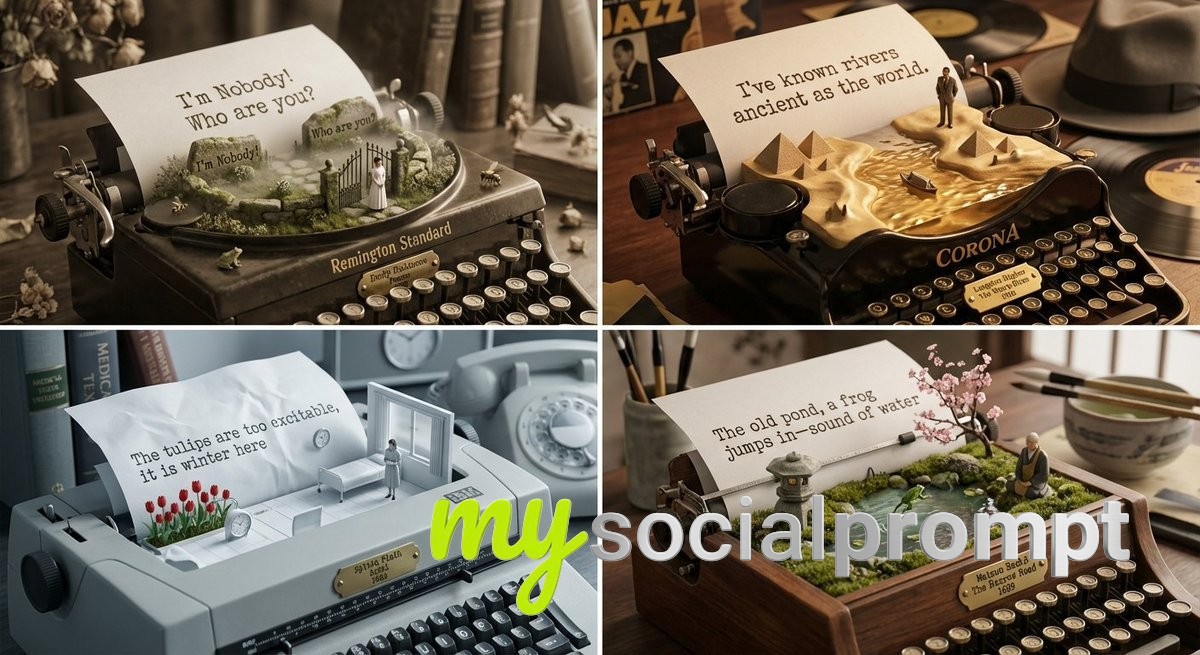
Role: Literary Curator & Typewriter SculptorInput: [Poet or Poem, e.g., T.S. Eliot, Pablo Neruda]Phase 1: Poetic Voice AnalysisIdentify the poet's signature rhythm, recurring imagery, and emotional coreSelect 4 contemporary or lesser-known poets with parallel sensibilitiesExtract 5-8 physical objects mentioned repeatedly in their workPhase 2: Visual ExecutionGoal: 2x2 Grid of "Typewriter Output as 3D Landscapes"Rules per Panel:The Base: A vintage typewriter (different model per poet's era)The Paper: A single sheet of paper loaded in the rollerThe Transformation: The typed text physically rises from the page, forming a 3D topographical landscapeThe Words: Key lines from the poem carved into the terrain like engraved stoneThe Symbols: Miniature objects from the poem placed in the landscape (tiny boat, rose, clock, door)The Poet: Microscopic figurine of the poet wandering through their own wordsThe Mood: Lighting matches emotional tone (fog for melancholy, harsh light for anger, soft gold for longing)The Metadata: Brass typewriter key showing "Poet | Collection | Year" **background: poet and poet era relevant items in the background.Output: 2x2 Grid, Macro Photography, shallow depth of field
Explore our literary curator series, where typewriter output transforms into 3D topographical landscapes. Each panel features a vintage typewriter from the poet's era, with key lines rising from the page as engraved stone. Miniature symbols (boat, rose, clock) and a microscopic poet wander through mood-lit terrain. This macro photography grid harmonizes poetic rhythm with visual sculpture. #PoetryArt #TypewriterArt #MacroPhotography
Comments (0)
You must be signed in to post a comment. Comments are automatically reviewed by AI moderation.
Sign in to commentNo comments yet. Be the first to leave a comment!