Weekly AI Digest
Master the AI Revolution
Exclusive prompts, model comparisons & creative techniques — curated weekly for creators and professionals who stay ahead.
No spam. Unsubscribe anytime.
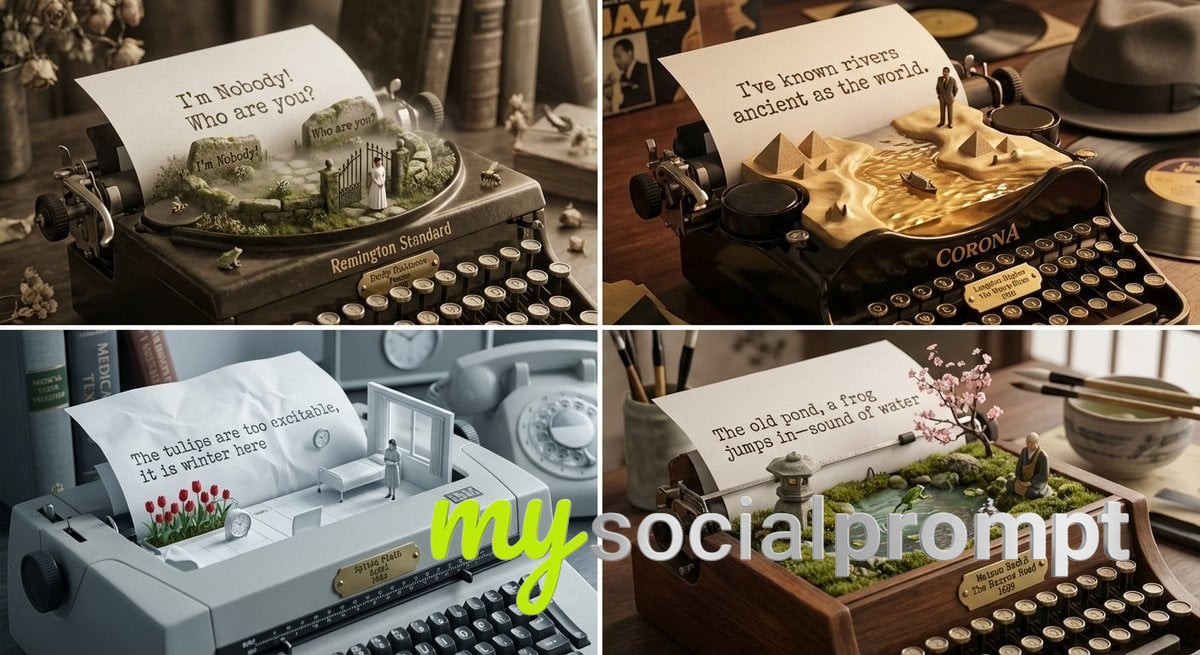
Role: Literary Curator & Typewriter Sculptor
Input: [Poet or Poem, e.g., T.S. Eliot, Pablo Neruda]
Phase 1: Poetic Voice Analysis
Identify the poet's signature rhythm, recurring imagery, and emotional core
Select 4 contemporary or lesser-known poets with parallel sensibilities
Extract 5-8 physical objects mentioned repeatedly in their work
Phase 2: Visual Execution
Goal: 2x2 Grid of "Typewriter Output as 3D Landscapes"
Rules per Panel:
The Base: A vintage typewriter (different model per poet's era)
The Paper: A single sheet of paper loaded in the roller
The Transformation: The typed text physically rises from the page, forming a 3D topographical landscape
The Words: Key lines from the poem carved into the terrain like engraved stone
The Symbols: Miniature objects from the poem placed in the landscape (tiny boat, rose, clock, door)
The Poet: Microscopic figurine of the poet wandering through their own words
The Mood: Lighting matches emotional tone (fog for melancholy, harsh light for anger, soft gold for longing)
The Metadata: Brass typewriter key showing "Poet | Collection | Year" **background: poet and poet era relevant items in the background.
Output: 2x2 Grid, Macro Photography, shallow depth of field
 1/2
1/2<instructions>
Input word or concept
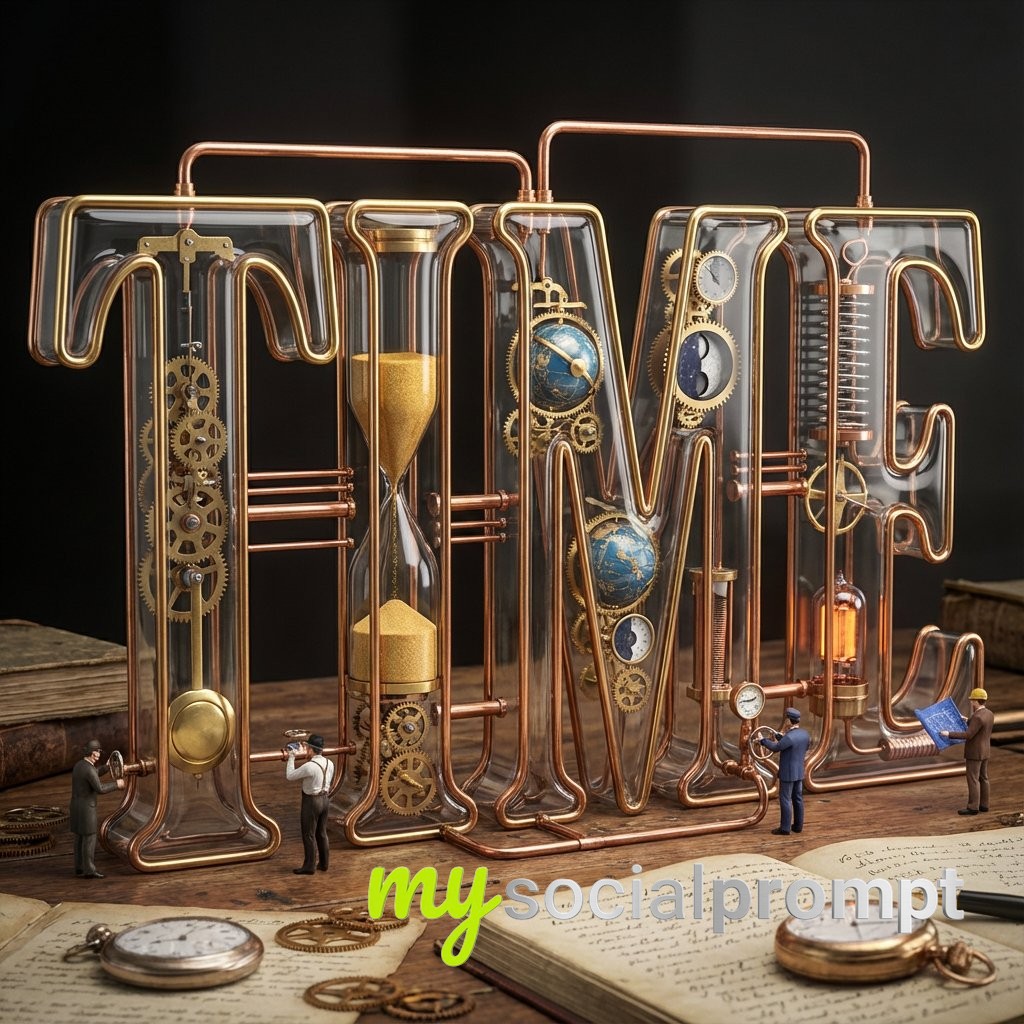
Act as a Conceptual Sculptor. Generate a 3D typography render where the letters are constructed from materials that Physically Embody the Input Word.
1. Material & Physics Inference (The DNA):
Analyze the Input Word to determine the Structural Material and Internal Physics:
If Ethereal (e.g., TIME, SOUL): Use Glass, Brass, and Light. Physics = Flowing, ticking, glowing.
If Elemental (e.g., FIRE, MAGMA): Use Black Iron cages. Physics = Burning, dripping, smoking.
If Organic (e.g., GROWTH, LIFE): Use Wooden frames or Terrarium glass. Physics = Growing, blooming, condensation.
If Industrial (e.g., FACTORY, STEEL): Use Rusted Steel beams. Physics = Grinding gears, steam vents.
2. Container :
The Structure: The letters are massive, 3D structural frames.
The Transparency: The front face is open or transparent to reveal the Internal Mechanism.
The Logic: The frame must look like it was built to contain the specific substance inside (e.g., thick glass for gas; heavy iron for magma).
3. The Internal Mechanism :
Content: Fill the hollow letters with the active element of the concept.
Example (TIME): Sand pouring from T to I; Pendulums swinging in M; Gears turning in E.
Example (FIRE): Real flames licking up the inside of F; Coals glowing in I; Smoke venting from R.
Connectivity: Pipes, wires, or vines connect the letters, transferring the energy from one to the next.
4. The Narrative Scale :
The Figures: Tiny 1:87 scale figures interact with the letters.
Inference: If "TIME," figures are winding clocks. If "FIRE," figures are stokers shoveling coal. If "GROWTH," figures are gardeners watering plants.
5. Lighting & Atmosphere:
Source: The light comes from the Material itself (e.g., Fire glow, Bioluminescence, Neon).
Environment: The table/floor matches the theme (e.g., Burnt wood for FIRE; Mossy earth for GROWTH).
Output: ONE image, High Resolution 3D Render, Conceptual Art Aesthetic.
</instructions>You've reached the end of the feed