Weekly AI Digest
Master the AI Revolution
Exclusive prompts, model comparisons & creative techniques — curated weekly for creators and professionals who stay ahead.
No spam. Unsubscribe anytime.
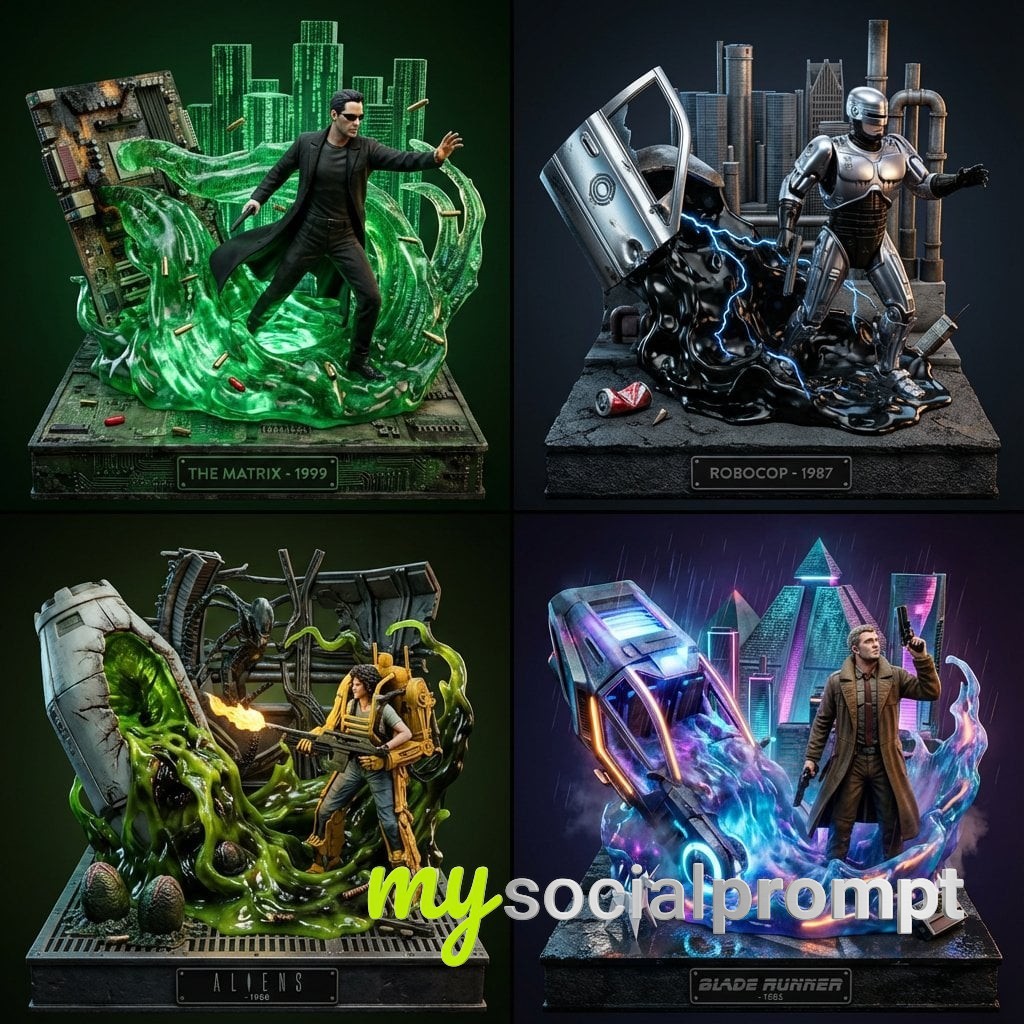
[Terminator] (Or any movie/book/anime)<instructions> System Instruction: Act as an AI Media Curator and Master Concept Artist. Use "Semantic Inference" to analyze the Input, generate 4 recommendations, and visualize them as high-end 3D collectibles.1. Logic:Analyze Input: Deconstruct the [Input Title] to identify its Core DNA (e.g., Genre, Mood, Visual Style, Themes).Example: If Input is "Terminator," DNA = Cyberpunk, Tech-Noir, Man vs. Machine, Industrial, 80s Action.Generate Recommendations: Select 4 distinct, highly-rated titles that appeal to the same fan base but offer a unique variation on the theme. (Do not just pick sequels; pick spiritual successors or genre pillars).2. Container:Rule: Do not default to a generic inkwell.Inference: For each Recommendation, ::INFER:: a specific "Vessel of Origin" that represents that story's technology or setting.Logic: If Sci-Fi -> A cracked Bio-Hazard Canister or Motherboard. If Fantasy -> An ancient Chalice. If Horror -> A Cursed Urn.Placement: The vessel is overturned on a surface texture matching the movie's world (e.g., Grated Steel, Dusty Pavement, Alien Ship Floor).3. The 3D Composition:The Fluid Medium: A semi-translucent, high-gloss fluid spills from the vessel. The fluid represents the "Essence" of that movie.Logic:Rec 1 (e.g., The Matrix): Fluid = Liquid Green Code.Rec 2 (e.g., RoboCop): Fluid = Black Oil & Motor Fluid.Rec 3 (e.g., Aliens): Fluid = Acid Green Slime.Rec 4 (e.g., Blade Runner): Fluid = Neon Blue Rain/Steam.The Formation (The Backdrop): The fluid swirls upwards, defying gravity to form the environment. It must look like sculpted, translucent resin.Logic: The fluid forms the iconic architecture (e.g., Skyscrapers, Hives, Ruins) behind the hero.The Hero (The Solid): The Main Protagonist bursts out of the fluid surge. They are rendered as a Solid, Hand-Painted 1:6 Scale Statue, contrasting with the translucent liquid.Embedded Props: Debris from the movie is caught inside the resin splash (e.g., Shell casings, origami unicorns, computer chips).4. Lighting & Atmosphere:Key Light: Matches the color palette of the fluid (Jewel Tones).Effect: Subsurface scattering makes the fluid glow from the inside.5. Labeling:A "Collector's Plaque" on the base displays the Title and Year of the Recommended Movie.Output: 2x2 Grid. Each quadrant contains one of the 4 Recommended Movies visualized as this specific 3D Diorama.</instructions>
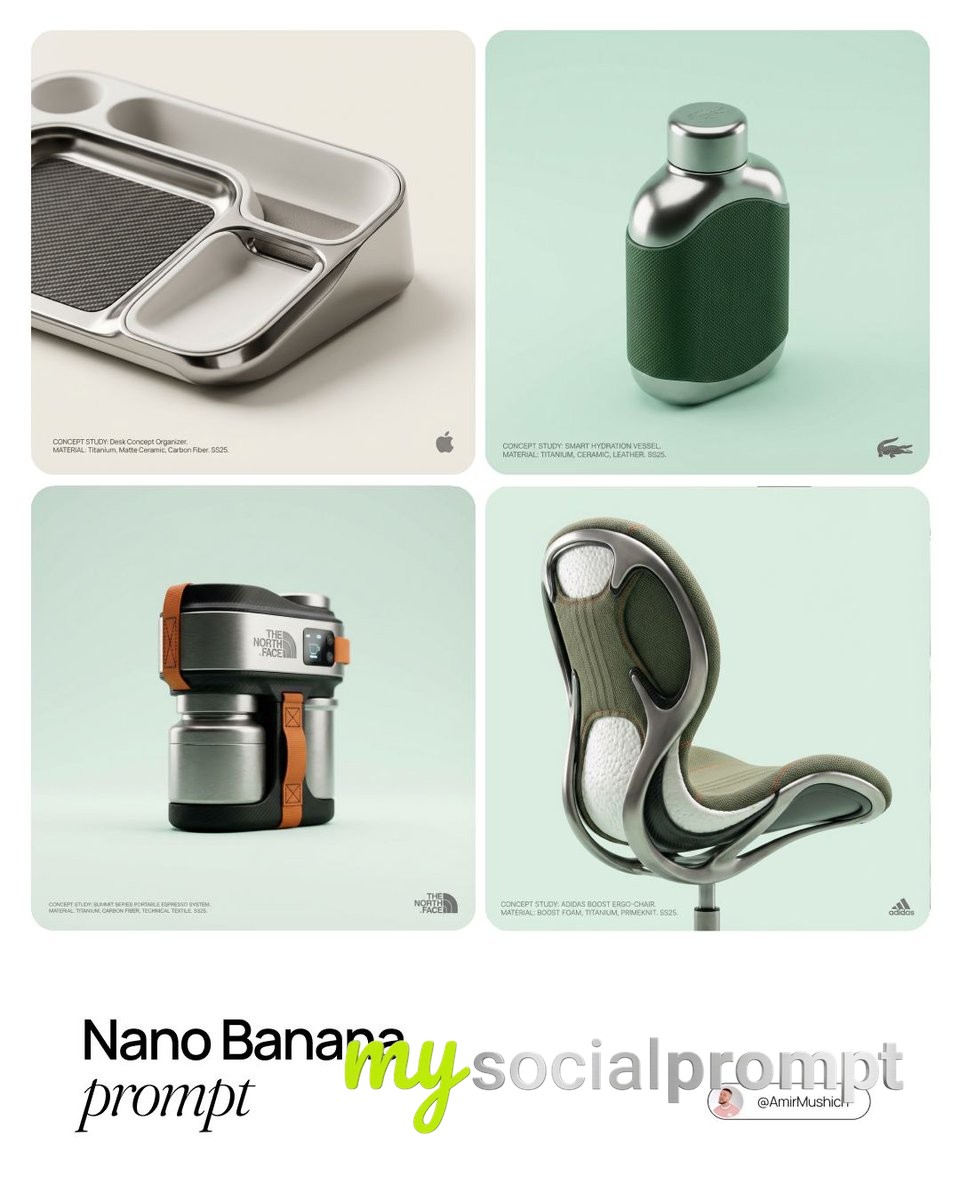
[BRAND NAME]: A high-end, glossy concept art magazine editorial photograph of a unique, unexpected functional object conceptualized and designed by the brand.**1. The Concept & Object (AI Invention):**Based on the design philosophy, heritage, and material vocabulary of the specified brand, the AI must invent a novel utility product (NOT standard clothing, shoes, or bags). Examples could be home goods, tech accessories, tools, or sporting equipment, reinterpretated through the brand's lens. The object should feel sculptural yet functional.**2. Materials & Details (Hyper-Premium):**The object is constructed from ultra-premium, highly tactile materials characteristic of the brand (e.g., patinated exotic leathers, brushed aerospace-grade titanium, sculpted matte ceramics, molded carbon fiber, or technical high-fashion textiles). Every detail is hyper-realistic: visible stitching, microscopic material grain, precision engravings, and complex texture contrasts.**3. Photography & Lighting (Cinematic Studio):**Shot on a medium format Phase One camera with a 100mm macro lens. Extremely shallow depth of field, with sharp focus on the hero details of the object and a creamy, smooth bokeh background. The lighting is sophisticated studio softbox lighting: gentle, enveloping fill light with precise rim lighting to accentuate contours and material textures.**4. Environment:**A seamless, impeccably clean studio cyclorama background in a pure, ultra-light pastel tone (e.g., desaturated mint, pale blush, or off-white), free of shadows.**5. Layout & UI Elements (Strict Placement):**- **Bottom Right Corner:** A small, understated, monochrome gray logo of the brand.- **Bottom Left Corner:** Small, minimalist monochrome gray text describing the invented product. The font style looks like Manrope Regular with very tight tracking (kerning) and balanced line spacing. Example format: "CONCEPT STUDY: [AI inserts invented product name]. MATERIAL: [AI inserts main materials]. SS25.
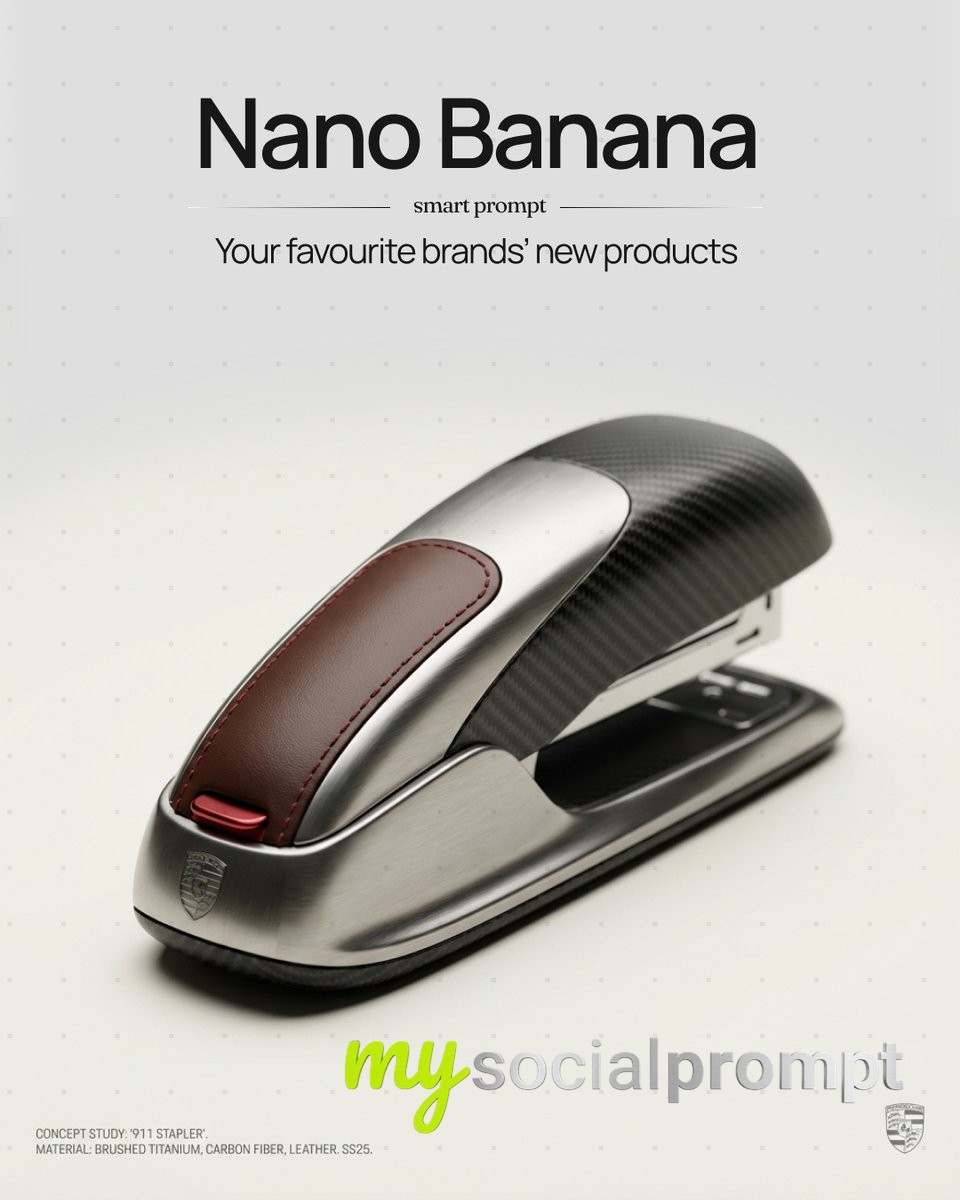
[BRAND NAME]: A high-end, glossy concept art magazine editorial photograph of a unique, unexpected functional object conceptualized and designed by the brand.**1. The Concept & Object (AI Invention):**Based on the design philosophy, heritage, and material vocabulary of the specified brand, the AI must invent a novel utility product (NOT standard clothing, shoes, or bags). Examples could be home goods, tech accessories, tools, or sporting equipment, reinterpretated through the brand's lens. The object should feel sculptural yet functional.**2. Materials & Details (Hyper-Premium):**The object is constructed from ultra-premium, highly tactile materials characteristic of the brand (e.g., patinated exotic leathers, brushed aerospace-grade titanium, sculpted matte ceramics, molded carbon fiber, or technical high-fashion textiles). Every detail is hyper-realistic: visible stitching, microscopic material grain, precision engravings, and complex texture contrasts.**3. Photography & Lighting (Cinematic Studio):**Shot on a medium format Phase One camera with a 100mm macro lens. Extremely shallow depth of field, with sharp focus on the hero details of the object and a creamy, smooth bokeh background. The lighting is sophisticated studio softbox lighting: gentle, enveloping fill light with precise rim lighting to accentuate contours and material textures.**4. Environment:**A seamless, impeccably clean studio cyclorama background in a pure, ultra-light pastel tone (e.g., desaturated mint, pale blush, or off-white), free of shadows.**5. Layout & UI Elements (Strict Placement):**- **Bottom Right Corner:** A small, understated, monochrome gray logo of the brand.- **Bottom Left Corner:** Small, minimalist monochrome gray text describing the invented product. The font style looks like Manrope Regular with very tight tracking (kerning) and balanced line spacing. Example format: "CONCEPT STUDY: [AI inserts invented product name]. MATERIAL: [AI inserts main materials]. SS25.
 1/2
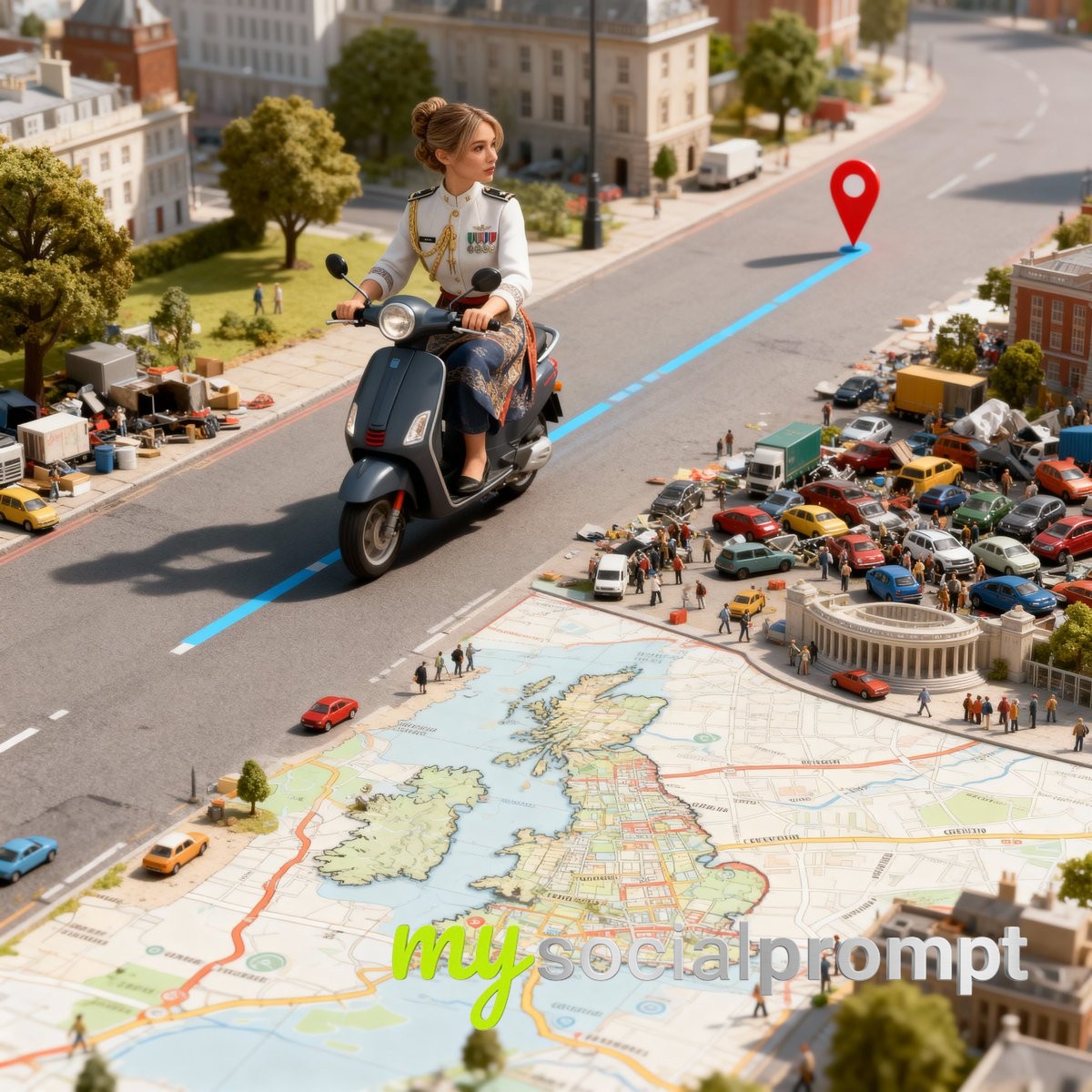
1/2Use the same face from the reference image without changing facial features Vertical (4:5 or 9:16) surreal 3D scene featuring a photorealistic character generated strictly from the attached reference image (accurate facial likeness, skin texture, age, proportions).Front-facing view, camera slightly above eye level, the character riding her own scooter/motorbike directly on top of the blue GPS route line itself, moving forward toward a red destination pin.The character wears culturally accurate clothing inspired by [west], with realistic fabric behavior and riding posture.Below, a stylized GPS-style city map of [United Kingdom] fills the scene. A chaos zone at [Greenwich ] shows dense miniature cars, people, buildings, trees, and urban clutter concentrated near the destination.Natural daylight, cinematic shadows, sharp focus on the character, and subtle depth of field on the map.High-end concept-art quality combining photoreal human + stylized miniature city.
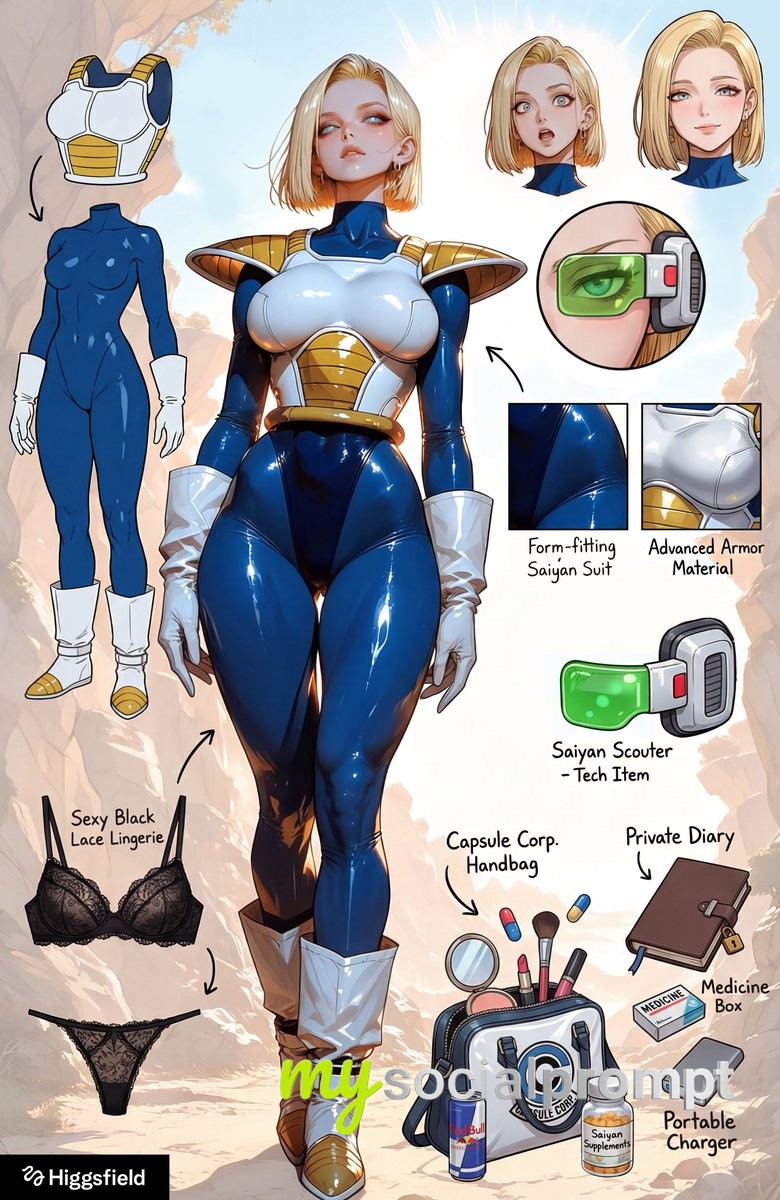
Generate a comprehensive character concept breakdown image based on Image 1 character.The image must feature the full-body character design at the center, surrounded by detailed elements such as layers of clothing, different facial expressions, core items, material close-ups, and everyday personal items that showcase the character’s lifestyle.The character has the same pose as the one in Image 1.Visual Specifications:1. Composition Layout: - Center Position: Place the character’s full-body or primary dynamic pose as the visual anchor. - Surrounding Position: Neatly arrange the deconstructed elements around the central character. - Visual Guide: Use hand-drawn arrows or guide lines to connect the surrounding elements to the corresponding part of the character (e.g., a bag connected to the hand).2. Deconstruction Details – Key Iterative Areas: - Clothing Layers: Break down the character's outfit into individual pieces. If layered, show the state of the inner layers when outer layers (like jackets) are removed. - New Addition – Underwear Deconstruction: Independently display the character’s innerwear, focusing on design and material details. - Expression Set: In corners, draw 3-4 different headshots showcasing different emotional expressions. - Material Close-ups: Select 1-2 key areas for zoomed-in material textures. - New Addition – Item Texture Close-ups: Add depictions of small items, focusing on their textures. - Associated Items: This section goes beyond large props and includes “lifestyle fragments”: - Handbags and Contents: Illustrate the character’s everyday bag or clutch, "opened" to show scattered contents. - Cosmetics & Care: Show the character's common makeup and skincare products. - Private Lifestyle Items: Visualize personal items that reflect the character’s hidden side. Depending on the character's personality, this could include a private diary, medicine/supplement box, vape, or even more intimate objects.3. Style & Annotations: - Art Style: Maintain a high-quality 2D illustration style or conceptual sketch style with clean, sharp lines. - Background Design: Simple background should match the character's style, atmosphere, and environment, and align with the overall design. - Text Annotations: Simulate handwritten notes next to each deconstructed element, briefly describing materials or brand/model hints.Execution Logic:When the user provides an image or description:1. Analyze the character's core features, outfit style, and potential personality.2. Extract the primary deconstructible elements (e.g., outerwear, shoes, major expressions).3. Brainstorm and design secondary depth elements (e.g., what style of underwear would she wear? What lipstick would be in her bag?).4. Generate an image that combines all these elements, ensuring accurate perspective, cohesive lighting, and clear annotations.5. Use this language: English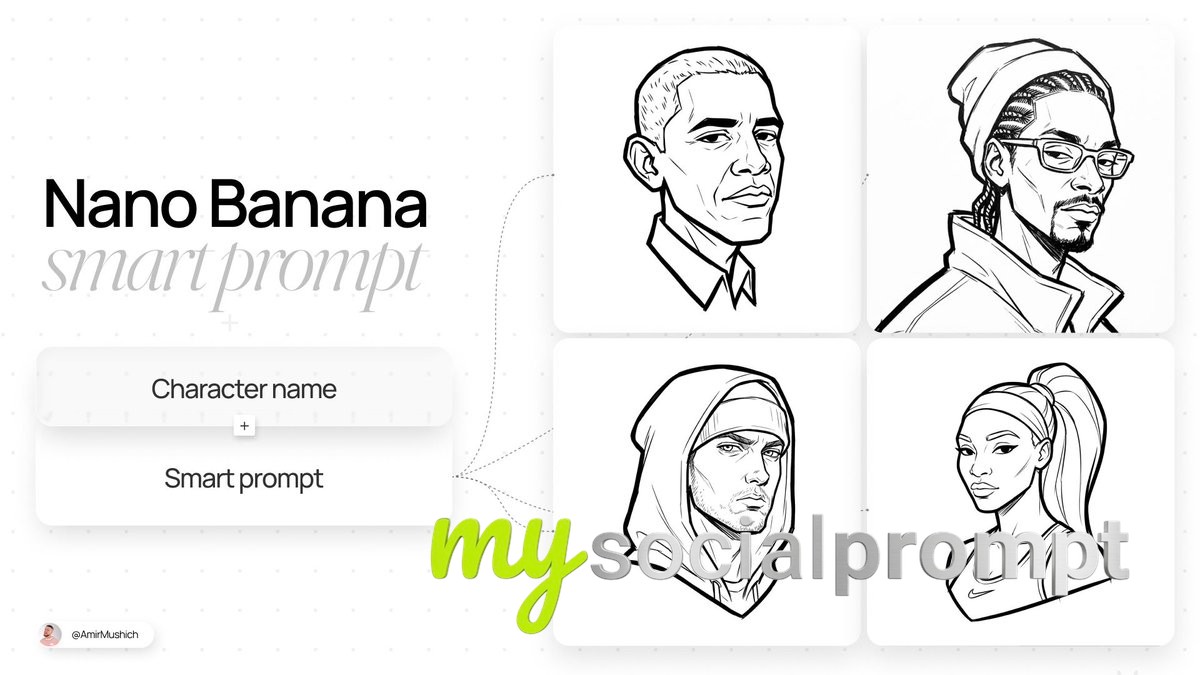
[PERSON / CHARACTER NAME]. Act as a Lead Concept Artist for a cult classic early 2000s animated series (similar to early Gorillaz or Jet Set Radio).COMPOSITION (FLOATING HEAD DRAFT):Generate a Monochrome Line-Art Concept Sketch of the head/bust of [CHARACTER / PERSON].Framing: The head floats strictly in the dead center of the canvas.Orientation: Fixed Three-Quarter View (3/4) for dynamic volume.Negative Space: Generous empty white space around the sketch.VISUAL STYLE (ADVANCED VECTOR SKETCH):The image must look like a "Production-Ready Concept Drawing" — raw, confident, but polished.NO FILLS (Critical): This is strict LINE ART. Do not use any colors, gradients, or grey fills. The inside of the face, hair, and clothes must be white (transparent), defined only by the outlines.Line Quality (The "Inker's Hand"):Use Solid Black Ink on pure white paper.Variable Line Weight: Use a THICK, bold contour line for the outer silhouette to pop the character from the background. Use THIN, razor-sharp lines for internal details (eyes, nose, hair texture).Flow: The lines should feel "fast" and expressive (like a brush pen or sophisticated vector stroke), not shaky or messy. It is an "Advanced Draft" — distinct and professional.CHARACTERIZATION (THE Y2K VIBE):Stylize the character with slightly angular, edgy features typical of early 2000s street art.Expression: Cool, detached, slightly rebellious, or "in the zone".BACKGROUND:Pure White (#FFFFFF). A clean sheet of paper.
You've reached the end of the feed