Weekly AI Digest
Master the AI Revolution
Exclusive prompts, model comparisons & creative techniques — curated weekly for creators and professionals who stay ahead.
No spam. Unsubscribe anytime.
 1/3
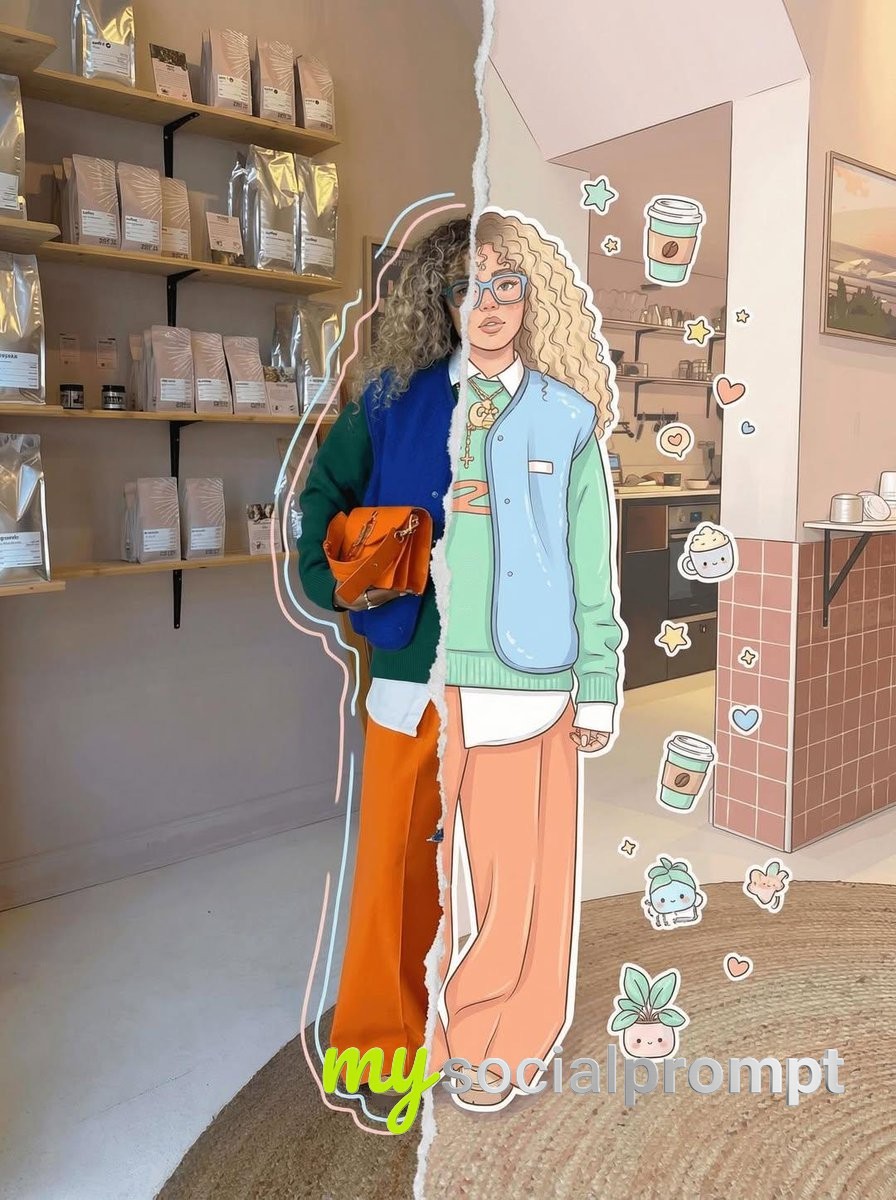
1/3High-detail 8K split-style composition where the subject is divided vertically into two halves.LEFT SIDE:Keep the original photo fully realistic. Preserve natural lighting, textures, and fine details. Slightly enhance sharpness and clarity. Add subtle hand-drawn doodle outlines (soft pastel or neon lines) around the subject for a creative aura.RIGHT SIDE:Transform the same subject into a stylized cartoon/digital illustration. Maintain the exact same pose, angle, and facial expression. Use clean lineart, soft shading, and pastel or vibrant colors in a modern cute style (chibi / semi-realistic). Add small decorative elements like sticker-style doodles, cute icons, or mini characters floating around.BACKGROUND (IMPORTANT):Keep the ORIGINAL background unchanged on BOTH sides. Do not replace, redraw, or stylize the background. Maintain consistency across the entire image.CENTER DIVISION:Add a vertical torn-paper or glitch-style transition separating the realistic and illustrated halves.STYLE:modern digital art, clean composition, soft lighting, aesthetically pleasing, social media styleQUALITY: 8K resolution, ultra-detailed.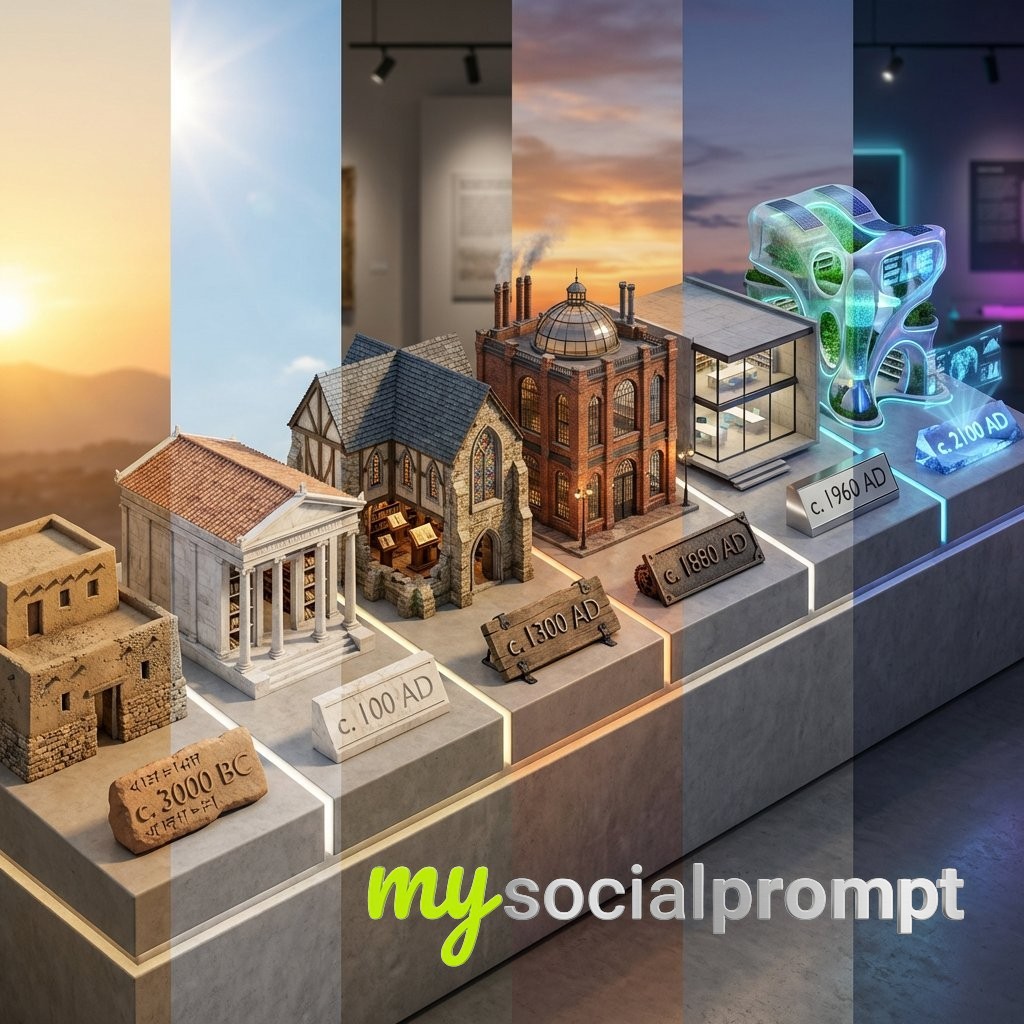
Input Variable A: [libraries] (e.g., Skyscrapers, Bridges, Libraries, Prisons)Input Variable B: [6] (e.g., 3, 5, or 8) System Instruction: Generate a hyper-realistic, 3D "Timeline Diorama" visualizing the evolution of an Architectural Typology. 1. Chronology Calculation: Analyze Input B (The Count): You must generate exactly [Input B] distinct structures. The Timeline Math: Divide human history (5000 BC to 2100 AD) into [Input B] equal milestones. Example (If Input B = 4): Ancient -> Medieval -> Industrial -> Future. Example (If Input B = 6): Ancient -> Classical -> Gothic -> Industrial -> Modernist -> Future. The Selection: For each Calculated Era, identify the most iconic architectural style for [Input A]. 2. Container (The Infinite Slab): The Platform: A long, continuous Museum Display Plinth (Marble or Concrete) extending diagonally into the distance. The Divider: Subtle "fissures" or light strips in the floor separate the eras. 3. Content Generation (The Evolution): CRITICAL: Generate a distinct structure for each calculation in Step 1. Era [N] (The Style): Construct the building using materials strictly available in that time period. Ancient: Mud, Thatch, Rough Stone. Classical/Medieval: Marble, Wood beams, Stained Glass. Industrial: Red Brick, Iron, Soot. Modern: Concrete, Steel, Plate Glass. Future: Bioplastic, Aerogel, Holograms, Greenery. 4. Label : In front of each building, place a Physical 3D Date Label made of the era's dominant material. (e.g., "1920" made of Art Deco Gold; "2050" made of glowing blue Hologram). 5. Visual Syntax: Camera: Isometric or High-Angle Diagonal to fit all [Input B] items in one frame. Scale: Uniform scale. 1:100 Architectural Model style. Atmosphere: The lighting evolves across the image (Sunrise on the left -> Noon -> Sunset -> Neon Night on the right). Output: ONE image, Ultra-Wide Aspect Ratio (21:9 if eras > 4), Architectural Render, Museum Lighting, High Texture Fidelity.
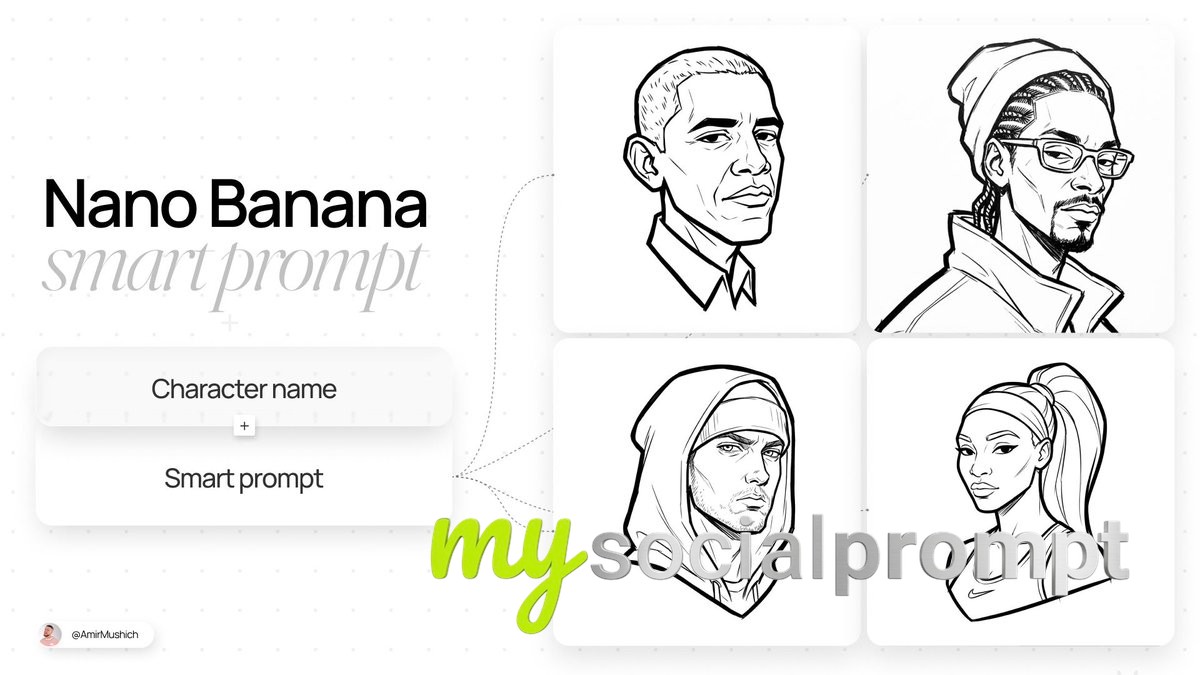
[PERSON / CHARACTER NAME]. Act as a Lead Concept Artist for a cult classic early 2000s animated series (similar to early Gorillaz or Jet Set Radio).COMPOSITION (FLOATING HEAD DRAFT):Generate a Monochrome Line-Art Concept Sketch of the head/bust of [CHARACTER / PERSON].Framing: The head floats strictly in the dead center of the canvas.Orientation: Fixed Three-Quarter View (3/4) for dynamic volume.Negative Space: Generous empty white space around the sketch.VISUAL STYLE (ADVANCED VECTOR SKETCH):The image must look like a "Production-Ready Concept Drawing" — raw, confident, but polished.NO FILLS (Critical): This is strict LINE ART. Do not use any colors, gradients, or grey fills. The inside of the face, hair, and clothes must be white (transparent), defined only by the outlines.Line Quality (The "Inker's Hand"):Use Solid Black Ink on pure white paper.Variable Line Weight: Use a THICK, bold contour line for the outer silhouette to pop the character from the background. Use THIN, razor-sharp lines for internal details (eyes, nose, hair texture).Flow: The lines should feel "fast" and expressive (like a brush pen or sophisticated vector stroke), not shaky or messy. It is an "Advanced Draft" — distinct and professional.CHARACTERIZATION (THE Y2K VIBE):Stylize the character with slightly angular, edgy features typical of early 2000s street art.Expression: Cool, detached, slightly rebellious, or "in the zone".BACKGROUND:Pure White (#FFFFFF). A clean sheet of paper.
You've reached the end of the feed