Weekly AI Digest
Master the AI Revolution
Exclusive prompts, model comparisons & creative techniques — curated weekly for creators and professionals who stay ahead.
No spam. Unsubscribe anytime.
 1/2
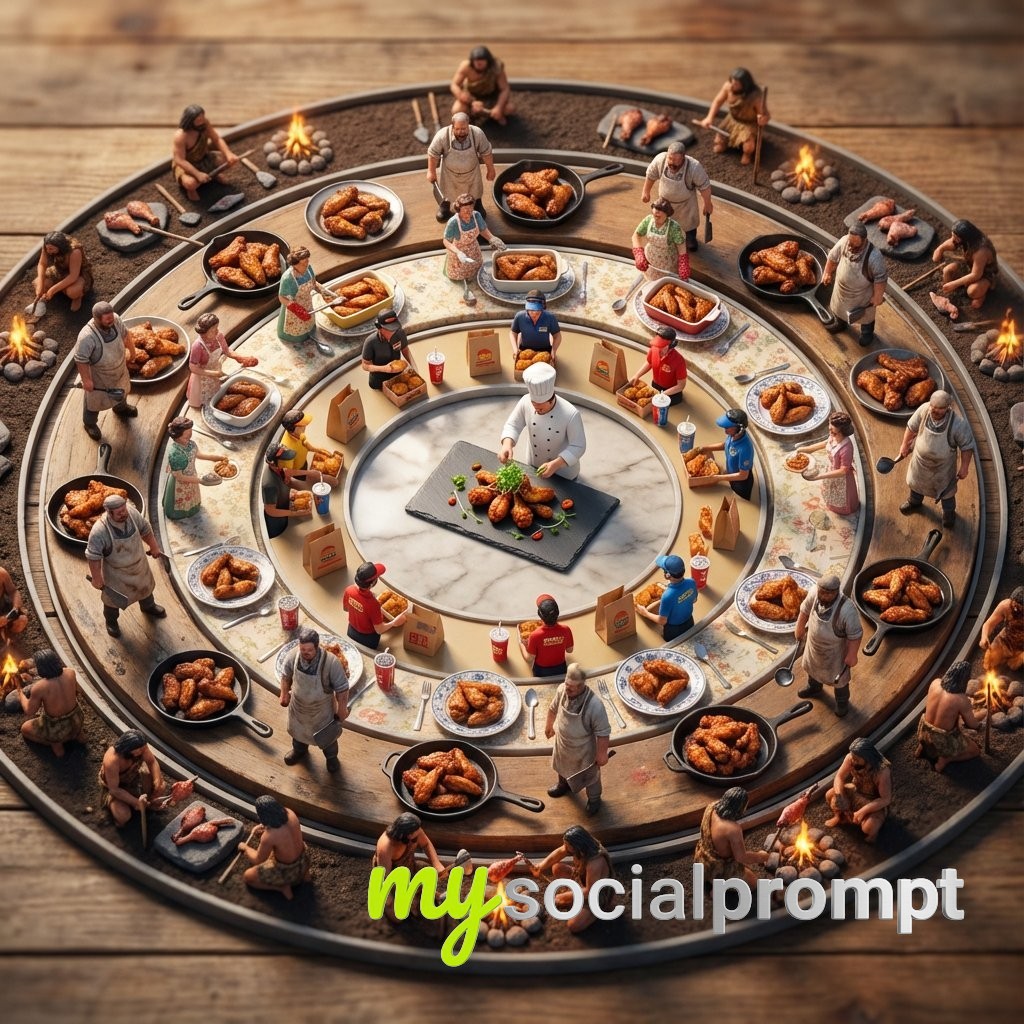
1/2Input Variable: [INSERT FOOD] (e.g., Fried Chicken, Sushi, Tacos, Coffee)System Instruction:Generate a hyper-realistic, high-angle "Food History Diorama" arranged in a Mandala format.CRITICAL: The scene must be populated by Tiny 1:87 Scale Figures (Chefs) that correspond to the specific era of each ring.1. Timeline Analysis:Analyze the history of the Input Food to determine the Attire and Tools of the workers in 5 eras:Stage 0 (Center): The Modern Chef (White Coat, Toque, Tweezers).Stage 1 (Commercial): The Fast Food Worker (Visor, Polo Shirt, Headset).Stage 2 (Domestic): The Home Cook (Floral Apron, Oven Mitts).Stage 3 (Industrial): The Butcher/Baker (Dirty White Apron, Cleaver, Rolled Sleeves).Stage 4 (Ancient): The Hunter/Gatherer (Tunic, Loincloth, Stone Tools, Fire).2. The Composition :Perspective: High Angle (75 Degrees). Not completely flat. We need to see the bodies of the tiny figures, not just their heads.The Orbits: 5 Distinct Concentric Rings.The Boundary (The Catwalk): Between each ring, there is a visible Negative Space (a thin gap). This is where the tiny chefs stand, presenting the food to the viewer.3. The Rings & The Residents Logic):The Center (Modern Pinnacle):Food: Deconstructed, gourmet plating on slate.The Figure: A Master Chef carefully placing a micro-green garnish with tweezers.Ring 1 (The Commercial Age):Food: Bright packaging, uniformity.The Figure: A Teenage Fast Food Worker holding a tray or a soda cup, standing next to the cardboard boxes.Ring 2 (The Domestic Age):Food: Casserole dishes or patterned china.The Figure: A 1950s Housewife or Home Cook holding a serving spoon or pie cutter.Ring 3 (The Industrial Age):Food: Cast iron skillets, tin plates, hearty portions.The Figure: A burly 19th Century Butcher or Cook holding a heavy knife or iron ladle.Ring 4 (The Ancient Origin):Food: Cooking over open fire, stone tools, raw ingredients (but cooked/charred enough to look appetizing).The Figure: An Ancient Human tending to a mini-campfire or grinding spices with a stone.4. The Background Morph:The surface texture underneath the figures changes with them:Center: Polished Stone.Middle: Linoleum/Wood Table.Edge: Dirt/Earth.5. Lighting & Scale:Tilt-Shift: Blur the outer edges slightly to emphasize the miniature scale of the people.Shadows: The figures must cast long shadows across the food to prove they are physically standing there.Output: ONE image, 1:1 Aspect Ratio, 8k Resolution, Miniature Photography style.
 1/2
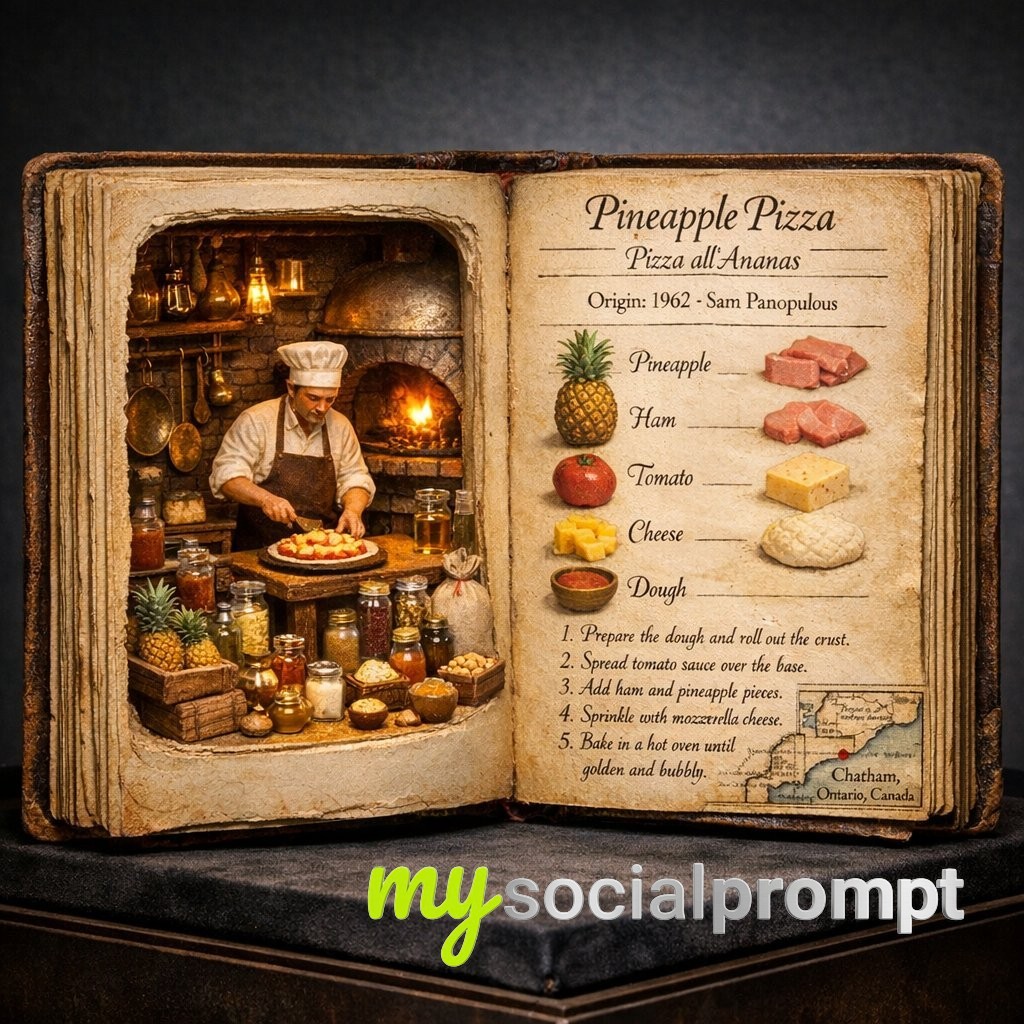
1/2Do this for Pineapple Pizza: <instruction>Input A: user uploads an image or shares name of dishLogic Identify the historical inventor (e.g., Raffaele Esposito or Henri Charpentier) and the exact year of origin.Task: A hyper-realistic 4:5 macro photograph of an oversized, open antique culinary codex resting on a dark velvet museum plinth.Left Page (The Living Diorama):The left side of the book is hollowed out like a secret compartment. Inside is a breathtaking 3D miniature scene. A highly detailed figurine of the dish’s inventor is captured mid-motion in a period-accurate kitchen. Around them are microscopic versions of the 10-15 key ingredients, each in its own tiny hand-blown glass vial or micro-wooden crate. Include miniature brass cooking tools specific to the era. The scene is lit from within the "pages" by a warm, magical amber glow.Right Page (The Technical Recipe):The right page is flat, aged parchment featuring elegant, faded Spencerian calligraphy and hand-painted watercolor illustrations.1. Top: The dish name in both English and its native language, with the bold "Origin Date."2. Middle: A vertical "Ingredient Blueprint" with hyper-detailed sketches of each raw component.3. Bottom: A small, detailed "Origin Map" showing the specific city of birth, styled like a 19th-century cartographic inset.4. Text: Visible, legible recipe steps written in ink that looks slightly raised on the paper.Style:Museum specimen photography. 85mm macro lens. The lighting should be a mix of cool gallery spotlights and the warm "internal" glow of the book's diorama. Extreme texture on the weathered leather binding and the tooth of the paper.Output: ONE image, 4:5 aspect ratio.</instruction>You've reached the end of the feed