Weekly AI Digest
Master the AI Revolution
Exclusive prompts, model comparisons & creative techniques — curated weekly for creators and professionals who stay ahead.
No spam. Unsubscribe anytime.
 1/2
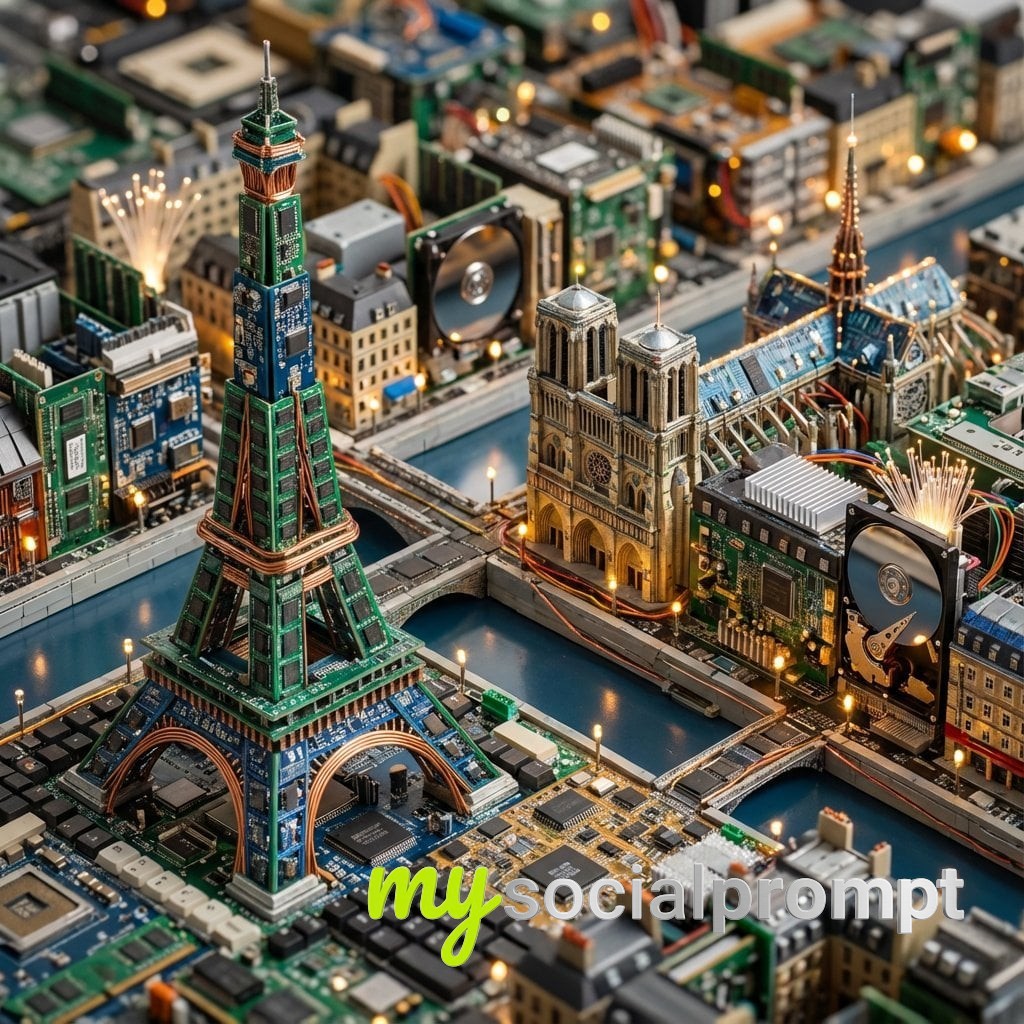
1/2(Paris, PC) Anchor: [Location] :: [Material Concept]::4Morphology: Miniature architectural cityscape of [Location], entire skyline constructed via the assemblage of [Material Concept] components, skyscrapers and structures formed from the constituent parts of [Material Concept], thematic structural engineering, hyper-detailed diorama::3Material Physics: Physical properties of [Material Concept] applied to architecture, [Material Concept] textures replacing concrete and glass, innate material logic of [Material Concept], high-fidelity surface details::3Illumination: Lighting exhibiting the surface properties of [Material Concept], ambient occlusion, volumetric atmosphere matching the material theme::2Render Stack: Tilt-shift photography, macro lens, f/2.8, 8k, scale model aesthetic, detailed texture mapping, Unreal Engine 5 render::1Negative: [Human presence, massive scale, blurry, low resolution, bad geometry, distortions, flat 2D, text, watermark]:: -1
 1/2
1/2Input Variable: [INSERT FOOD] (e.g., Fried Chicken, Sushi, Tacos, Coffee)System Instruction:Generate a hyper-realistic, high-angle "Food History Diorama" arranged in a Mandala format.CRITICAL: The scene must be populated by Tiny 1:87 Scale Figures (Chefs) that correspond to the specific era of each ring.1. Timeline Analysis:Analyze the history of the Input Food to determine the Attire and Tools of the workers in 5 eras:Stage 0 (Center): The Modern Chef (White Coat, Toque, Tweezers).Stage 1 (Commercial): The Fast Food Worker (Visor, Polo Shirt, Headset).Stage 2 (Domestic): The Home Cook (Floral Apron, Oven Mitts).Stage 3 (Industrial): The Butcher/Baker (Dirty White Apron, Cleaver, Rolled Sleeves).Stage 4 (Ancient): The Hunter/Gatherer (Tunic, Loincloth, Stone Tools, Fire).2. The Composition :Perspective: High Angle (75 Degrees). Not completely flat. We need to see the bodies of the tiny figures, not just their heads.The Orbits: 5 Distinct Concentric Rings.The Boundary (The Catwalk): Between each ring, there is a visible Negative Space (a thin gap). This is where the tiny chefs stand, presenting the food to the viewer.3. The Rings & The Residents Logic):The Center (Modern Pinnacle):Food: Deconstructed, gourmet plating on slate.The Figure: A Master Chef carefully placing a micro-green garnish with tweezers.Ring 1 (The Commercial Age):Food: Bright packaging, uniformity.The Figure: A Teenage Fast Food Worker holding a tray or a soda cup, standing next to the cardboard boxes.Ring 2 (The Domestic Age):Food: Casserole dishes or patterned china.The Figure: A 1950s Housewife or Home Cook holding a serving spoon or pie cutter.Ring 3 (The Industrial Age):Food: Cast iron skillets, tin plates, hearty portions.The Figure: A burly 19th Century Butcher or Cook holding a heavy knife or iron ladle.Ring 4 (The Ancient Origin):Food: Cooking over open fire, stone tools, raw ingredients (but cooked/charred enough to look appetizing).The Figure: An Ancient Human tending to a mini-campfire or grinding spices with a stone.4. The Background Morph:The surface texture underneath the figures changes with them:Center: Polished Stone.Middle: Linoleum/Wood Table.Edge: Dirt/Earth.5. Lighting & Scale:Tilt-Shift: Blur the outer edges slightly to emphasize the miniature scale of the people.Shadows: The figures must cast long shadows across the food to prove they are physically standing there.Output: ONE image, 1:1 Aspect Ratio, 8k Resolution, Miniature Photography style.
 1/2
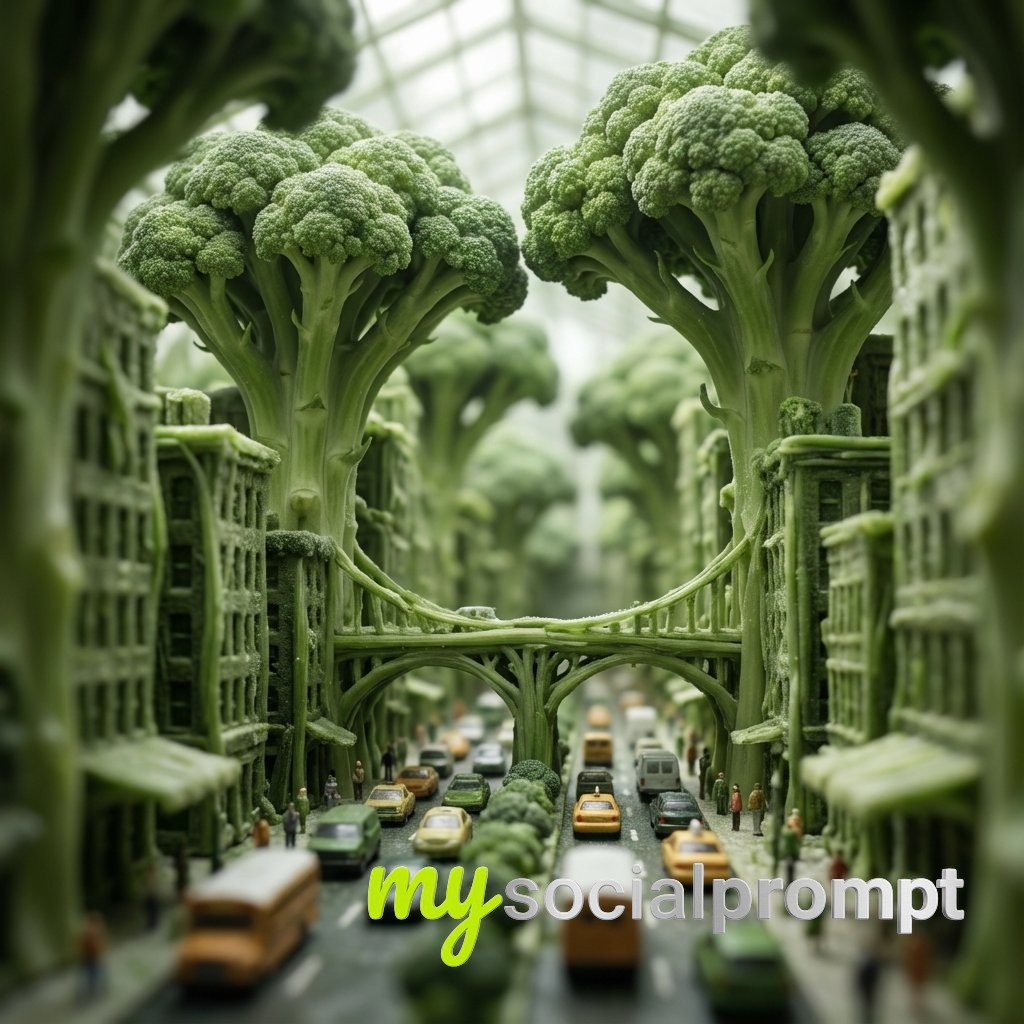
1/2[a famous NYC scene]::3Morphology: Fractal vegetable growth, branching organic towers, dense floret canopy roofs, stalk-like support columns::3Material Physics: Fibrous vegetable stalk, dense green particulate florets, matte organic plant matter, fresh condensation::2.5Illumination: Dappled forest lighting, soft skylight, ambient occlusion in the crevices::1.5Render Stack: Tilt-shift miniature effect, botanical photography, macro details on massive scale::1Negative: [Windows, metal, glass, grey, industrial, smoke]:: -1
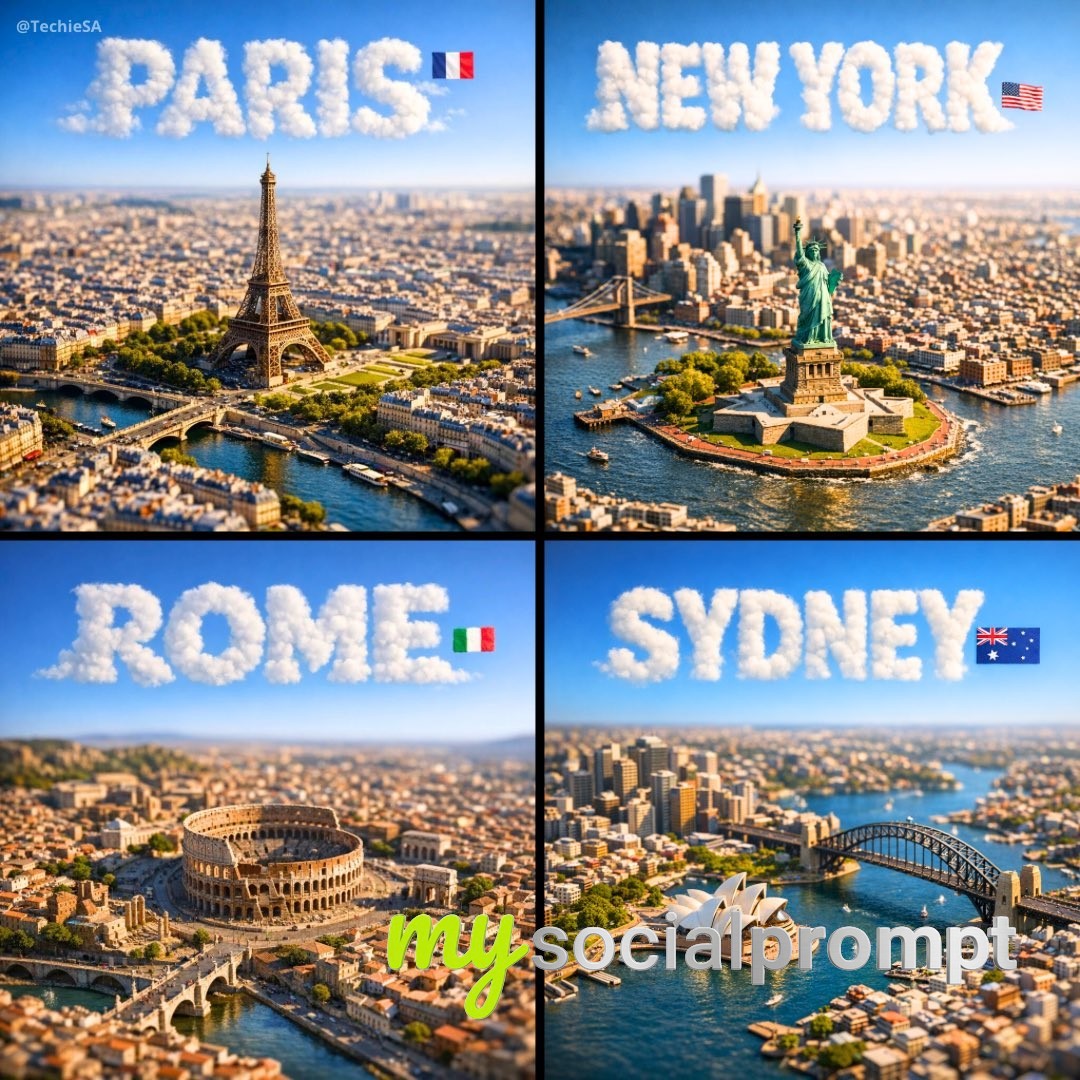
A square, 1:1 photorealistic close-up photograph of an incredibly detailed physical miniature geography and city model of [CITY], focused only on the city’s most recognizable landmark area (not the full city map).The scene shows a compact 3D topographic environment built around the iconic landmark zone — realistic terrain, elevation changes, nearby rivers or coastline if relevant, and surrounding urban density scaled naturally to highlight the landmark as the clear focal point. The model feels like a premium museum diorama rather than a map.Thousands of tiny, highly detailed buildings, roads, bridges, and infrastructure cluster organically around the landmark. The landmark itself rises prominently above everything else, instantly recognizable even at a glance.Strong natural side sunlight casts long, realistic shadows across the miniature terrain, enhancing depth and realism. Shallow depth of field (tilt-shift style) keeps the landmark zone sharply in focus while softly blurring the outer edges of the square frame. The entire scene appears as a tangible, physical model illuminated by real-world light.Above the city, the sky is perfectly clean and empty — no clouds at all — except for the city name.The name [CITY] appears integrated into the sky as thick, three-dimensional cloud typography, sculpted from dense white vapor. The letters are bold, volumetric, and clearly readable, with soft shadowing and subtle depth, floating naturally in the open sky. Opacity ~70%, but with enough thickness to remain instantly legible.A small, minimal national flag is placed subtly near the sky text (corner or aligned to the typography), balanced and unobtrusive.Format: Square 1080×1080Style: Ultra-photorealistic, cinematic, premium miniature realismMood: Awe, clarity, instantly recognizable, highly shareable
 1/2
1/2(Paris, PC) Anchor: [Location] :: [Material Concept]::4Morphology: Miniature architectural cityscape of [Location], entire skyline constructed via the assemblage of [Material Concept] components, skyscrapers and structures formed from the constituent parts of [Material Concept], thematic structural engineering, hyper-detailed diorama::3Material Physics: Physical properties of [Material Concept] applied to architecture, [Material Concept] textures replacing concrete and glass, innate material logic of [Material Concept], high-fidelity surface details::3Illumination: Lighting exhibiting the surface properties of [Material Concept], ambient occlusion, volumetric atmosphere matching the material theme::2Render Stack: Tilt-shift photography, macro lens, f/2.8, 8k, scale model aesthetic, detailed texture mapping, Unreal Engine 5 render::1Negative: [Human presence, massive scale, blurry, low resolution, bad geometry, distortions, flat 2D, text, watermark]:: -1
You've reached the end of the feed