Weekly AI Digest
Master the AI Revolution
Exclusive prompts, model comparisons & creative techniques — curated weekly for creators and professionals who stay ahead.
No spam. Unsubscribe anytime.
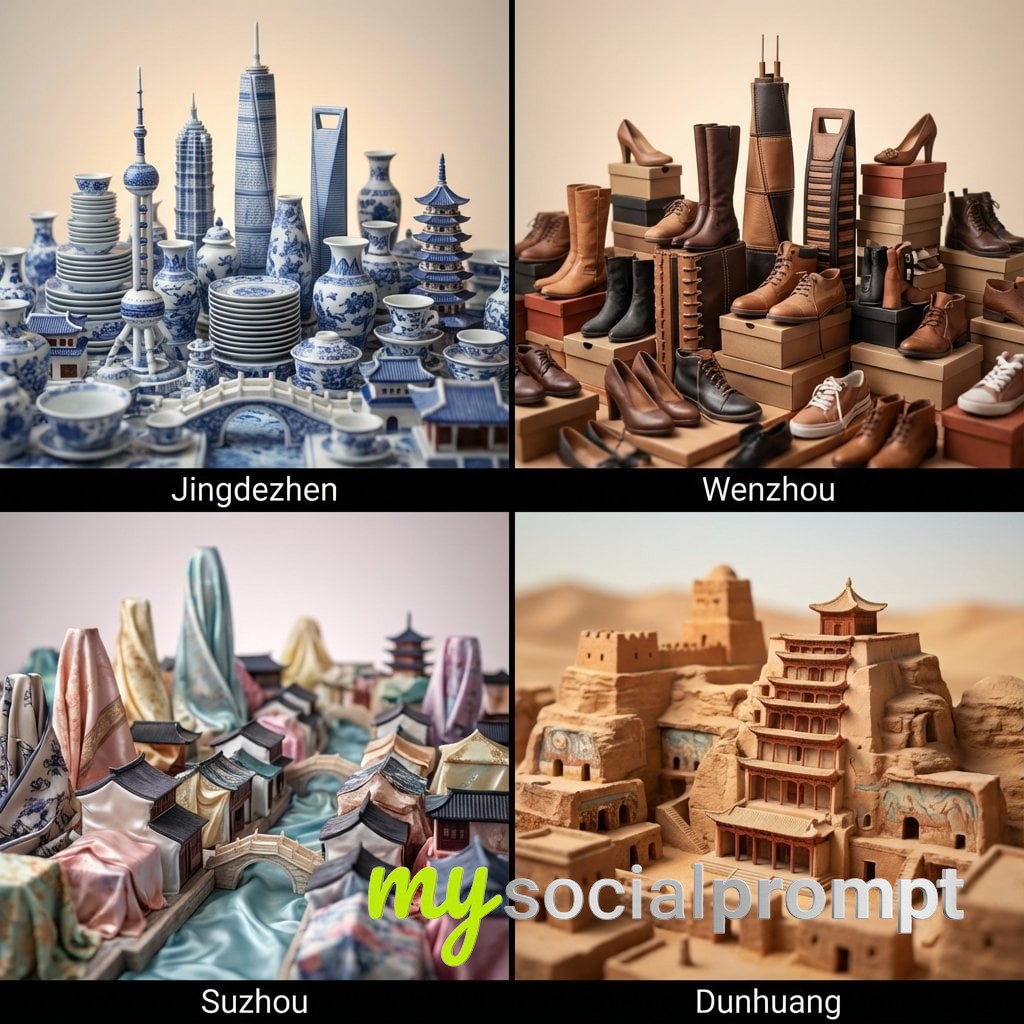
Do this for China: <instructions>
Input = Country
Act as a world class visual artist and geography expert. For every country, find 4 less known cities and the one product that is very popular there. Do research to get this step right.

Function Draw ($ City, $ Material) Anchor: [Location] :: [Material Concept]::4
Morphology: Miniature architectural cityscape of [Location], entire skyline constructed via the assemblage of [Material Concept] components, skyscrapers and structures formed from the constituent parts of [Material Concept], thematic structural engineering, hyper-detailed diorama::3
Material Physics: Physical properties of [Material Concept] applied to architecture, [Material Concept] textures replacing concrete and glass, innate material logic of [Material Concept], high-fidelity surface details::3
Illumination: Lighting exhibiting the surface properties of [Material Concept], ambient occlusion, volumetric atmosphere matching the material theme::2
Render Stack: Tilt-shift photography, macro lens, f/2.8, 8k, scale model aesthetic, detailed texture mapping, Unreal Engine 5 render::1
Negative: [Human presence, massive scale, blurry, low resolution, bad geometry, distortions, flat 2D, text, watermark]:: -1

Output: 2x2 grid, for each panel execute Draw Function for one of the cities plus the associated popular product. Name of the city underneath
</instructions>
 1/2
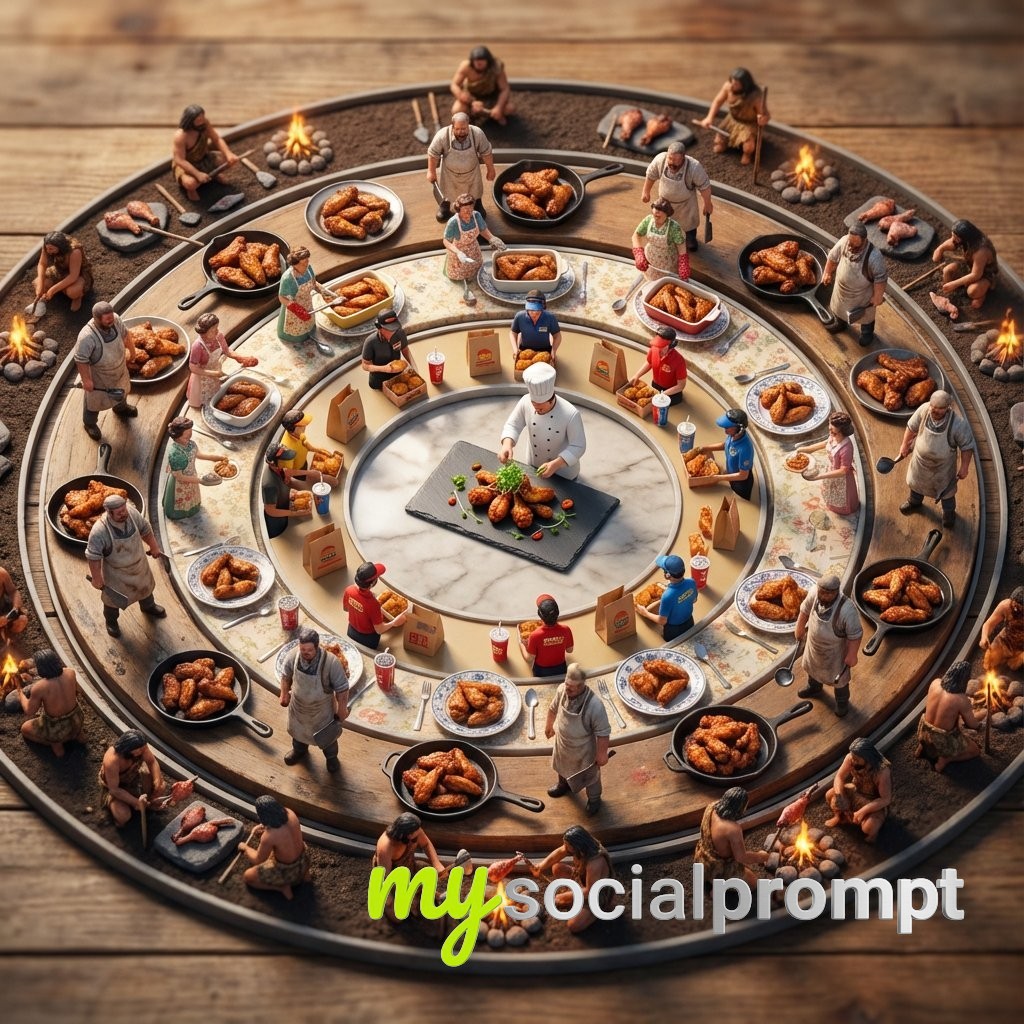
1/2Input Variable: [INSERT FOOD] (e.g., Fried Chicken, Sushi, Tacos, Coffee)System Instruction:Generate a hyper-realistic, high-angle "Food History Diorama" arranged in a Mandala format.CRITICAL: The scene must be populated by Tiny 1:87 Scale Figures (Chefs) that correspond to the specific era of each ring.1. Timeline Analysis:Analyze the history of the Input Food to determine the Attire and Tools of the workers in 5 eras:Stage 0 (Center): The Modern Chef (White Coat, Toque, Tweezers).Stage 1 (Commercial): The Fast Food Worker (Visor, Polo Shirt, Headset).Stage 2 (Domestic): The Home Cook (Floral Apron, Oven Mitts).Stage 3 (Industrial): The Butcher/Baker (Dirty White Apron, Cleaver, Rolled Sleeves).Stage 4 (Ancient): The Hunter/Gatherer (Tunic, Loincloth, Stone Tools, Fire).2. The Composition :Perspective: High Angle (75 Degrees). Not completely flat. We need to see the bodies of the tiny figures, not just their heads.The Orbits: 5 Distinct Concentric Rings.The Boundary (The Catwalk): Between each ring, there is a visible Negative Space (a thin gap). This is where the tiny chefs stand, presenting the food to the viewer.3. The Rings & The Residents Logic):The Center (Modern Pinnacle):Food: Deconstructed, gourmet plating on slate.The Figure: A Master Chef carefully placing a micro-green garnish with tweezers.Ring 1 (The Commercial Age):Food: Bright packaging, uniformity.The Figure: A Teenage Fast Food Worker holding a tray or a soda cup, standing next to the cardboard boxes.Ring 2 (The Domestic Age):Food: Casserole dishes or patterned china.The Figure: A 1950s Housewife or Home Cook holding a serving spoon or pie cutter.Ring 3 (The Industrial Age):Food: Cast iron skillets, tin plates, hearty portions.The Figure: A burly 19th Century Butcher or Cook holding a heavy knife or iron ladle.Ring 4 (The Ancient Origin):Food: Cooking over open fire, stone tools, raw ingredients (but cooked/charred enough to look appetizing).The Figure: An Ancient Human tending to a mini-campfire or grinding spices with a stone.4. The Background Morph:The surface texture underneath the figures changes with them:Center: Polished Stone.Middle: Linoleum/Wood Table.Edge: Dirt/Earth.5. Lighting & Scale:Tilt-Shift: Blur the outer edges slightly to emphasize the miniature scale of the people.Shadows: The figures must cast long shadows across the food to prove they are physically standing there.Output: ONE image, 1:1 Aspect Ratio, 8k Resolution, Miniature Photography style.
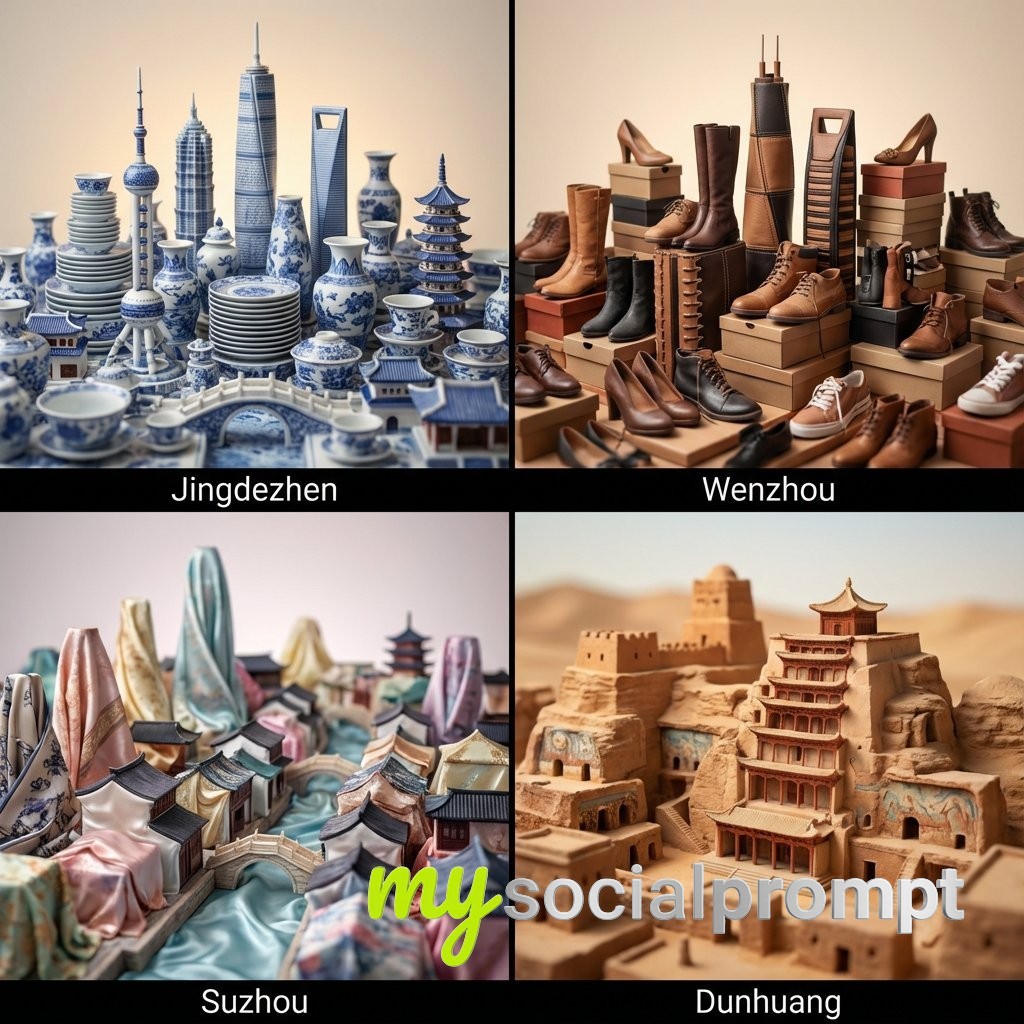
Do this for China: <instructions>Input = CountryAct as a world class visual artist and geography expert. For every country, find 4 less known cities and the one product that is very popular there. Do research to get this step right. Function Draw ($ City, $ Material) Anchor: [Location] :: [Material Concept]::4Morphology: Miniature architectural cityscape of [Location], entire skyline constructed via the assemblage of [Material Concept] components, skyscrapers and structures formed from the constituent parts of [Material Concept], thematic structural engineering, hyper-detailed diorama::3Material Physics: Physical properties of [Material Concept] applied to architecture, [Material Concept] textures replacing concrete and glass, innate material logic of [Material Concept], high-fidelity surface details::3Illumination: Lighting exhibiting the surface properties of [Material Concept], ambient occlusion, volumetric atmosphere matching the material theme::2Render Stack: Tilt-shift photography, macro lens, f/2.8, 8k, scale model aesthetic, detailed texture mapping, Unreal Engine 5 render::1Negative: [Human presence, massive scale, blurry, low resolution, bad geometry, distortions, flat 2D, text, watermark]:: -1Output: 2x2 grid, for each panel execute Draw Function for one of the cities plus the associated popular product. Name of the city underneath</instructions>
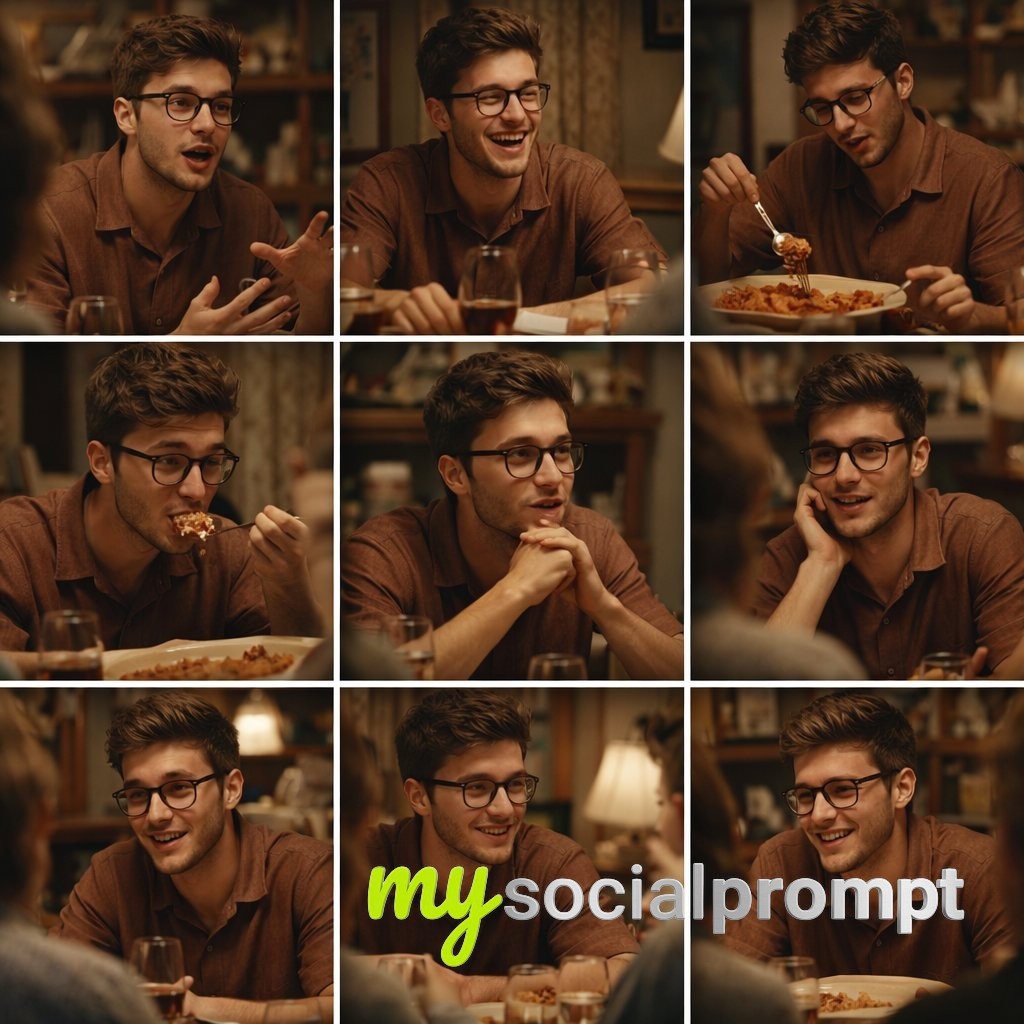
A 3x3 grid storyboard contact sheet comprised of nine candid, cinematic movie stills showing a continuous sequence of a young man, approximately 20-25 years old. He has tousled brown hair and a youthful, expressive face, clean-shaven. Across all nine panels, he is consistently wearing a brown short-sleeved linen button-down shirt and is seated at a wooden dining table during a family dinner. The panels show varied natural actions: gesturing with his hands while animatedly talking, laughing, eating lasagna from a large dish, listening intently, and smiling. The environment is a warm, cozy home dining room with a wooden hutch filled with china and patterned wallpaper visible in the background. The lighting is soft, warm tungsten evening light creating natural shadows. The shots are a mix of medium angles and close-ups with a shallow depth of field, rendered with a film photography aesthetic and slight grain. 1/3
1/3{
"subject": {
"person": "Ana de Armas",
"hair": "Shoulder-length wavy brunette hair",
"makeup": "Dark eye makeup, red lipstick"
},
"attire": {
"dress": "Metallic gold spaghetti strap slip dress"
},
"action_and_pose": {
"pose": "Standing, left hand resting on the table",
"action": "Holding a glass of champagne in her right hand"
},
"setting_and_props": {
"location": "Festive dinner table",
"table_items": [
"White china",
"Gold cutlery",
"Lit candles",
"Confetti"
],
"background": "Warm, out-of-focus wall of golden bokeh lights and ribbons"
},
"lighting_and_atmosphere": {
"lighting": "Warm and intimate",
"mood": "Festive, elegant"
},
"style_and_framing": {
"shot_type": "Medium portrait",
"style": "Photorealistic photo"
}
}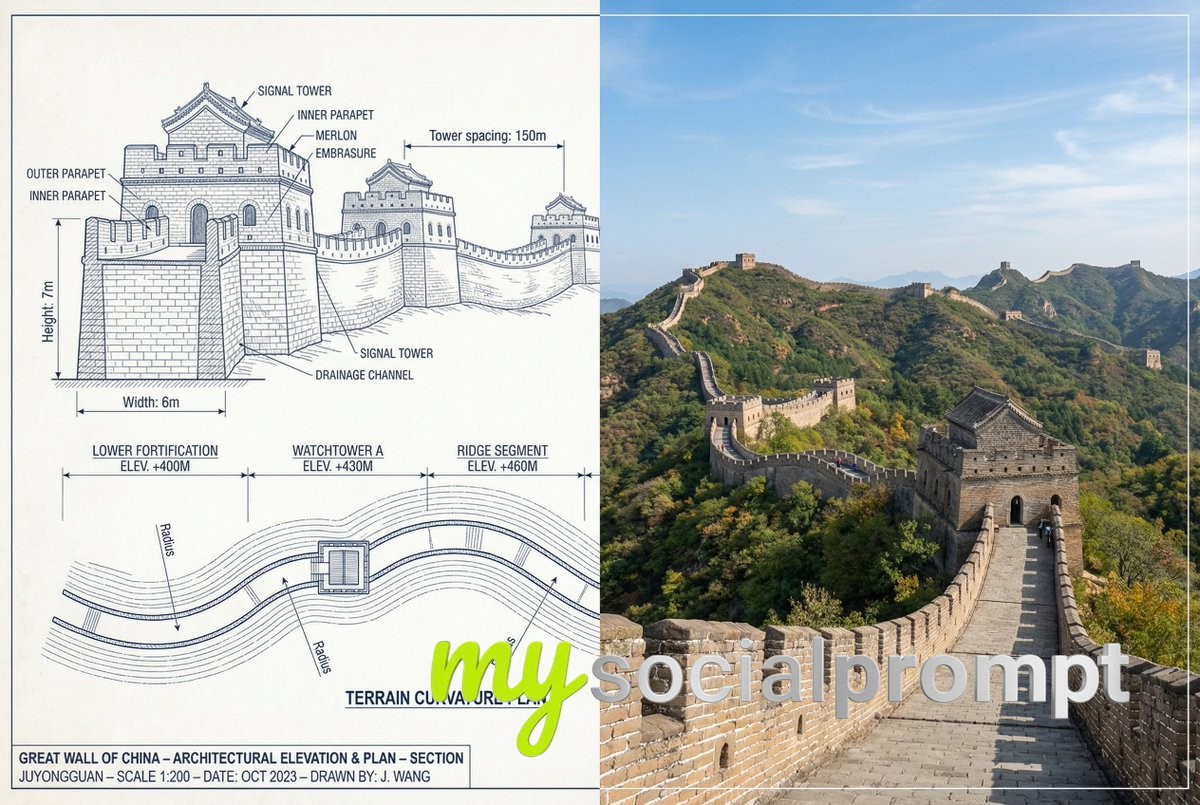
Sketch to skyline Great Wall of China visualized with Google Nano Banana Pro on @lovart_aiPrompt - { "objective": "Create a side-by-side comparison image featuring a technical sketch and real photograph of the Great Wall of China", "image_specifications": { "style": "Mixed media (Technical drawing + Real photograph)", "layout": "Horizontal split - Left side: Sketch with measurements, Right side: Real photo", "aspect_ratio": "3:2" }, "left_side": { "content_type": "Technical sketch of the Great Wall of China", "features": [ "Detailed architectural lines showing wall segments, watchtowers, and defensive structures", "Numerical measurements for wall height, width, and tower spacing", "Elevation labels for wall sections and towers", "Side elevation and top-down layout illustrating wall curvature along terrain" ], "text_annotations": { "units": "Metric (meters)", "language": "English", "font_style": "Blueprint or engineering-style typography" }, "positioning": "Take up the left half of the image" }, "right_side": { "content_type": "High-resolution real photo of the Great Wall of China", "features": [ "Wide panoramic view of the wall stretching across mountains", "Natural daylight with clear or lightly clouded sky", "Realistic colors with visible stone texture and surrounding landscape" ], "positioning": "Take up the right half of the image" }, "visual_elements": { "border_division": "Vertical line or subtle transition between left (sketch) and right (photo)", "color_palette": { "left": "Monochrome or blueprint blue for sketch", "right": "Natural realistic colors" } }, "output_format": { "type": "Image", "use_case": [ "Educational poster", "Architectural comparison", "Historical visualization", "Tourism visual aid" ], "high_resolution": true }}You've reached the end of the feed